Can It Stop Safely When Loaded? Why Brakes and Stopping Distance Matter in a Powered Dump Hauler
Share
A powered dump hauler is often judged by how much it can carry.
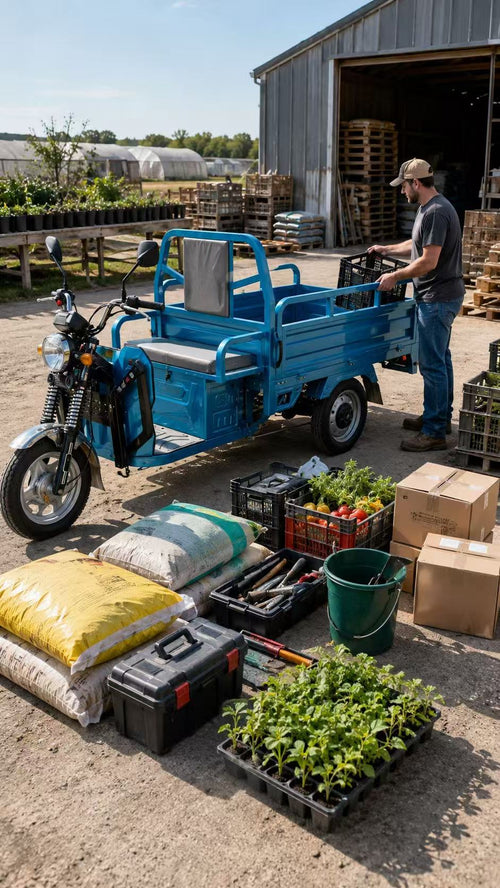
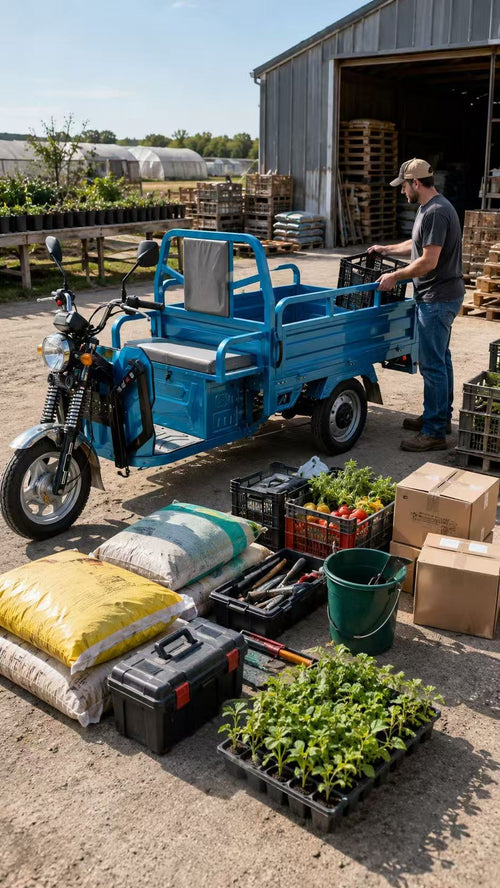
Buyers compare cargo bed size, load capacity, battery range, tire type, dump function, motor power, ground clearance, and whether the vehicle can move soil, gravel, feed bags, mulch, compost, manure bedding waste, tools, plant material, or maintenance supplies across a farm, ranch, horse stable, nursery, greenhouse, landscaping site, or property maintenance route.
Those details matter.
But carrying the load is only half of the question.
The other half is:
Can it stop safely when loaded?
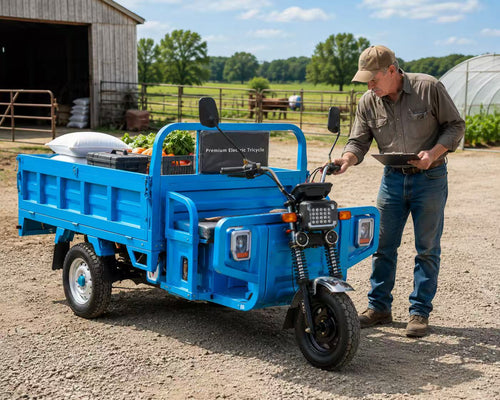
A powered dump hauler, electric dump cart, electric work trike, battery-powered utility cart, powered wheelbarrow, motorized wheelbarrow, electric utility trike, compact utility vehicle, or small farm hauler may look strong when parked. But in real daily work, the operator needs to slow down, stop, hold position, park, and stay in control while the cargo bed is carrying weight.
A vehicle that moves a load well but feels uncertain when stopping is not truly practical.
That is why brakes, stopping distance, parking brake habits, ground condition, load weight, route planning, and low-speed control should be part of the buying decision.
Loaded stopping is different from empty stopping
An empty powered dump hauler is easier to stop than a loaded one.
When the cargo bed is empty, the vehicle has less weight moving forward. When the bed carries feed bags, wet soil, gravel bags, manure bedding waste, compost, tools, mulch, plant material, or maintenance supplies, the total moving weight increases.
That extra weight affects stopping.
The operator may need more distance to slow down. The vehicle may feel heavier during turns or stops. The load may shift if the stop is sudden. The tires may need more firm ground to grip. The brake system has to work with the real load, not just the vehicle frame.
This does not mean a loaded electric dump cart is unsafe.
It means the operator should expect a different stopping feel when loaded.
A buyer should not only test or imagine the vehicle empty.
They should think about the hauler during real work.
Brakes matter more when the route is short and crowded
Some buyers assume braking is mainly important for fast vehicles.
That is wrong.
Brakes also matter for low-speed work vehicles because the work area may be crowded.
A powered dump hauler may operate near barn doors, horse stalls, feed rooms, greenhouse benches, nursery rows, fencing, gates, parked tractors, tool racks, trailers, loading areas, apartment sidewalks, HOA courtyards, maintenance buildings, mulch piles, and workers on foot.
Even at low speed, the operator needs predictable stopping.
A slow vehicle that cannot stop cleanly in a short work area can still create problems.
In daily hauling, safe stopping is not about speed.
It is about control.
Stopping distance changes with load type
Not all loads behave the same.
A few feed bags placed low in the bed may feel stable. Loose mulch may shift slightly. Wet soil can be dense and heavy. Gravel bags can concentrate weight. Tools can slide if they are not placed properly. Manure bedding waste may be bulky but uneven. Plant trays may be light but delicate.
The load affects how the vehicle stops.
Heavy dense material may increase stopping distance. Loose tools may move during sudden braking. Tall or uneven loads may feel less stable. A load placed too far to one side may affect control during a stop or turn.
The best braking experience begins before the vehicle moves.
The operator should load low, balanced, and stable.
A powered dump hauler is easier to stop when the load is placed correctly.
Ground condition affects braking control
A brake system does not work alone.
It works with the tires and the ground.
Firm gravel, dry concrete, compacted dirt, stable barnyard surfaces, and level equipment yards usually give better stopping control than wet grass, loose mud, steep slopes, deep gravel, icy patches, or uneven soft ground.
A farm utility vehicle or electric dump cart used on private property should be matched to the route.
If the route is loose, wet, sloped, or uneven, the operator should leave more stopping space and reduce speed earlier.
A loaded powered dump hauler on firm ground may feel predictable. The same load on wet grass or loose gravel may require more care.
Buyers should think about the worst normal surface on their property, not only the best one.
Stopping space should be planned before the first trip
A good route is not only about where the vehicle can fit.
It is also about where the vehicle can stop.
Before using a powered dump hauler for daily work, the operator should know the stopping areas:
Where can the vehicle stop before a barn entrance?
Where can it stop before a gate?
Where can it stop near a dump pile?
Where can it stop before a greenhouse doorway?
Where can it stop beside a trailer?
Where can it stop near people, animals, or parked equipment?
If the route has narrow passages, blind corners, slopes, shared walkways, or tight barnyard turns, stopping space becomes even more important.
A powered dump hauler should not be driven into a route where the operator has no clear place to slow down or stop.
Brake checks should be part of daily use
Before the first load, the operator should confirm that the brakes feel normal.
This does not require a complicated inspection.
A simple low-speed brake check in a clear area can help the operator notice problems before carrying material.
The operator should pay attention to whether the vehicle slows smoothly, whether the brake response feels consistent, whether the parking brake holds when needed, and whether anything feels unusual.
If the brakes feel weak, delayed, noisy, uneven, or different from normal, the vehicle should not be loaded for heavy work until the issue is understood.
A powered dump hauler is a daily work tool.
Daily tools need basic daily checks.
Parking brake habits matter on farms and stables
A vehicle does not only need to stop.
It also needs to stay parked.
This matters when the operator steps out to open a gate, move a feed bag, unload tools, check a stall area, inspect a dump zone, or talk with another worker.
A parking brake or parking habit should be used properly when the hauler is stopped in a work area.
This is especially important on slight slopes, gravel yards, barn entrances, ranch lanes, nursery service areas, greenhouse paths, or property maintenance routes.
Even a small movement can be a problem if the vehicle is near animals, people, plants, tools, buildings, or parked equipment.
The operator should not assume the vehicle will stay still just because it has stopped moving.
Stopping and parking are different actions.
Low-speed control supports safe braking
Braking is easier when the vehicle is already moving slowly.
A powered dump hauler should be operated at a speed that matches the route, surface, load, and visibility.
If the operator enters a barnyard, stable area, greenhouse lane, nursery path, equipment shed, apartment maintenance route, or ranch gate too fast, the brake system has less time and space to work.
Slow control makes stopping smoother.
It also reduces load shift, protects cargo, and gives the operator more time to react.
For daily work, the best braking habit starts before the brake is used:
Move slowly enough that stopping feels calm.
Heavy loads need earlier slowdown
A loaded electric dump cart should not be driven as if it were empty.
The operator should begin slowing earlier when carrying heavy material.
This matters with gravel, wet soil, compost, dense mulch, water-heavy manure bedding waste, bagged feed, tools, or multiple supplies.
The heavier the load, the more important it is to avoid sudden stops.
An early, gradual slowdown helps keep the load stable and gives the tires more time to grip the ground.
This is especially useful near barns, gates, animal areas, nursery benches, property sidewalks, and loading zones.
A powered dump hauler is not a race vehicle.
It is a short-distance material handling tool.
Its value comes from controlled movement, not fast movement.
Stopping on slopes requires more caution
Slopes change braking.
Even a small slope can make a loaded powered dump hauler feel heavier when stopping. If the cargo bed is carrying dense material, the vehicle may need more distance and more careful control.
This matters on ranch lanes, farm driveways, greenhouse ramps, barn entrances, landscaping sites, gravel paths, and property maintenance routes.
The operator should avoid sudden stops on slopes when possible. The load should be kept low and balanced. The vehicle should move slowly before reaching the slope. The operator should not wait until the last moment to brake.
If a route feels too steep or too loose for a loaded hauler, the better decision is to reduce the load, choose another route, or unload in smaller trips.
A powered dump hauler is useful because it reduces manual hauling, but it still needs a route that supports safe stopping.
Braking near animals should be calm and predictable
Horse stables, cattle areas, poultry yards, and small farm animal areas require calm vehicle movement.
Sudden stops can startle animals. Fast approaches can make the operator look less in control. Loose cargo can shift and make noise. A rushed stop near a stall, gate, feeding area, or barn aisle can create unnecessary stress.
For animal-related work, smooth stopping is part of good handling.
The operator should slow down early, approach quietly, and stop with enough space around animals, people, and equipment.
A powered dump hauler used in horse stable or ranch work should feel predictable, not aggressive.
This is one reason braking control matters even at low speed.
Property maintenance routes need clear stop zones
Property maintenance work often happens around people.
Apartment communities, HOA neighborhoods, resorts, schools, parks, warehouses, nurseries, and private estates may include sidewalks, landscaping beds, parked cars, doorways, residents, customers, visitors, pets, and other workers.
A loaded electric work trike should not be driven into areas where stopping space is unclear.
Before daily use, the team should define where the vehicle can stop, where it can park, and where it should not enter when loaded.
This is especially important when carrying tools, cleaning supplies, mulch bags, soil bags, branches, trash bags, or maintenance parts.
Good stopping habits make the hauler look more professional and reduce confusion in shared work areas.
Brake performance should match the real work cycle
A buyer should not think about brakes only as a mechanical feature.
They should think about the full work cycle.
Load the cargo bed.
Move across the route.
Slow down before a turn.
Stop near the work area.
Park while stepping out.
Unload or check the load.
Move again.
Repeat.
If any part of this cycle feels uncontrolled, the vehicle may not fit the job.
A powered dump hauler used for daily hauling should support smooth starts, steady movement, calm braking, and stable parking.
This is different from only asking whether the vehicle has brakes.
The better question is whether the braking behavior fits the work environment.
Wet or loose surfaces increase stopping distance
Rain, wet grass, soft soil, loose gravel, mud, and dusty concrete can all change stopping distance.
The vehicle may still be usable in some of these conditions, but the operator should leave more space and move more slowly.
A loaded battery-powered utility cart should not be treated the same on wet grass as it is on dry concrete. A compact utility vehicle carrying soil bags on loose gravel should not be stopped as late as an empty vehicle on firm ground.
Surface matters.
The buyer should look at the real work areas:
Is the barnyard firm?
Is the gravel deep?
Does the route stay wet after rain?
Are there shaded areas that remain slick?
Does the vehicle need to stop near a slope, gate, or doorway?
These details affect braking in real use.
Sudden stops can disturb the load
Stopping too quickly can affect the cargo.
Feed bags may slide. Tools may shift. Buckets may tip. Plant trays may move. Loose mulch may pile forward. Wet material may push against the bed wall. A toolbox may slide toward the front.
This can damage materials, make unloading harder, or create a mess.
A powered dump hauler should be operated so the load stays stable.
That means loading low, keeping materials below the bed edges, avoiding loose tall stacks, and slowing down gradually before stopping.
Good braking protects both the operator and the cargo.
The parking area matters after stopping
Stopping is not finished until the vehicle is safely parked.
The operator should think about where the hauler will sit while loaded.
A loaded electric dump cart parked on a slope, soft shoulder, muddy edge, or uneven gravel may not be as stable as one parked on firm, level ground.
For daily work, parking areas should be chosen carefully.
Near barns, stables, greenhouses, nurseries, equipment sheds, and property maintenance yards, the operator should park where the vehicle is visible, level, and out of the way.
The parking brake should be used according to the vehicle’s normal operating practice.
If the vehicle feels unstable when parked, the load or location should be adjusted.
Stopping distance should be tested with light loads first
A new operator should not begin with the heaviest load.
It is better to learn braking feel with an empty or light load first. Then the operator can understand how the vehicle slows, how much space is needed, and how the brakes feel on the normal route.
After that, loads can increase gradually.
This is useful for farms, ranches, horse stables, nurseries, greenhouses, landscaping crews, and property maintenance teams.
A powered dump hauler may be simple to operate, but every worksite has its own surface, slope, route, and stopping conditions.
Learning the stopping feel before heavy hauling helps reduce mistakes.
Shared vehicles need shared brake habits
If several workers use the same powered dump hauler, braking habits should be consistent.
One worker may drive carefully. Another may stop suddenly. One may understand the parking brake. Another may forget it. One may load the bed evenly. Another may stack tools poorly.
This can create inconsistent use.
Teams should agree on simple rules:
Check the brakes before the first load.
Drive slowly when loaded.
Slow down early before turns.
Avoid sudden stops.
Use clear stopping zones.
Park on firm, level ground when possible.
Do not ignore unusual brake feel.
Report brake issues before heavy use.
These habits are simple, but they help the vehicle stay useful.
Buyers should ask brake questions before purchase
Before choosing a powered dump hauler, electric dump cart, electric work trike, battery-powered utility cart, electric utility trike, powered wheelbarrow, motorized wheelbarrow, compact utility vehicle, or small farm hauler, buyers should ask:
How will the vehicle feel when loaded?
How much stopping space does the route allow?
Will the vehicle operate near animals, people, gates, or buildings?
Does the ground stay firm or become loose and wet?
Will the operator need to stop on slopes?
Will the vehicle be shared by several workers?
Is the parking brake easy to use?
Can the operator test braking before carrying heavy loads?
Will the load stay stable during gradual stops?
Are there clear stop zones near the barn, shed, stable, greenhouse, or work area?
These questions help buyers think beyond load capacity.
A safe hauler must stop as well as it carries
A powered dump hauler should make daily material handling easier.
It should help move feed bags, mulch, gravel, soil, compost, manure bedding waste, tools, plant supplies, yard debris, and maintenance materials with less manual effort.
But the vehicle must also slow down, stop, and stay parked in a controlled way.
A strong cargo bed is useful.
A dump function is useful.
Good tires are useful.
Battery power is useful.
But braking control is part of the same buying decision.
If the operator cannot stop comfortably when loaded, the vehicle will not feel dependable.
Before buying, do not only ask how much the hauler can carry.
Ask how it will stop with that load in the real work area.
A powered dump hauler that carries well and stops predictably is more likely to become a trusted daily work tool.