Flat Bed or Dump Bed? Choosing Between Non-Dump and Hydraulic Dump Electric Utility Vehicles
Share
Not every electric utility vehicle needs a dump bed. But for the right type of work, a hydraulic dump bed can make a major difference.
Many buyers compare electric utility vehicles by payload, battery range, motor power, cargo bed size, and price. Those details matter. But one of the most important buying questions is often simpler:
Do you only need to carry materials, or do you also need to unload them repeatedly?
A non-dump electric utility vehicle and a hydraulic dump electric utility vehicle can both support short-distance work. Both can help farms, ranches, landscaping crews, construction cleanup teams, nurseries, warehouses, and property maintenance workers move materials across a worksite.
But they are not the same tool.
A non-dump electric utility vehicle is useful when the job is mostly carrying tools, bags, boxes, supplies, or equipment. A hydraulic dump electric utility vehicle becomes more valuable when the job involves repeated hauling and unloading of loose bulk materials such as soil, gravel, manure, compost, mulch, wood chips, sand, bedding waste, or debris.
The right choice depends on what you move, how often you move it, and how much labor is spent unloading it.
What is a non-dump electric utility vehicle best for?
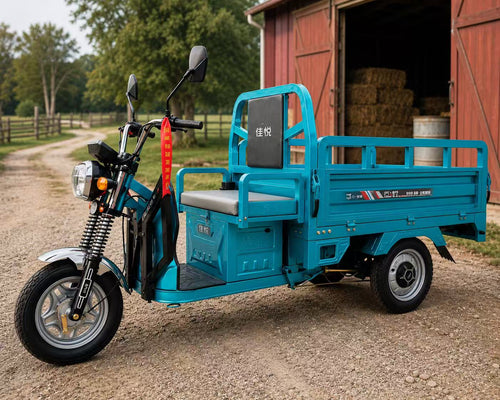
A non-dump electric utility vehicle is best for cargo that needs to be transported, organized, and removed by hand.
This includes toolboxes, repair parts, feed bags, boxed supplies, cleaning equipment, landscaping tools, nursery trays, buckets, packaged materials, small machines, maintenance supplies, and other items that should not be dumped onto the ground.
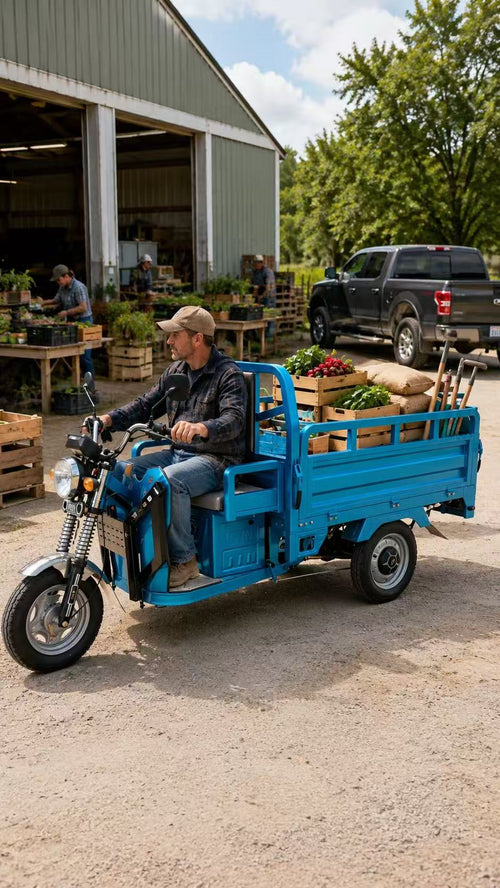
For property maintenance, warehouse support, campus work, apartment community service, farm supply runs, or general facility tasks, a flat cargo bed can be simple and practical. Workers can load items into the bed, drive to the work area, and unload them carefully by hand.
If most of the work involves tools, boxes, bags, and equipment, a non-dump electric utility vehicle may be enough.
What is a hydraulic dump electric utility vehicle best for?
A hydraulic dump electric utility vehicle is best for loose materials that need to be moved and unloaded repeatedly.
Common materials include topsoil, gravel, manure, compost, mulch, wood chips, wet soil, sand, bedding waste, grass clippings, branches, yard debris, and small cleanup material. These materials are often dirty, heavy, bulky, or difficult to remove from a cargo bed by hand.
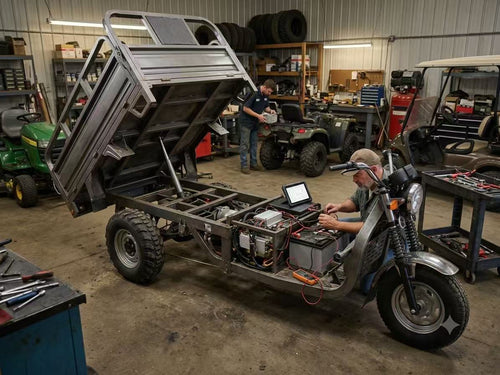
With a hydraulic dump bed, the operator can raise the cargo bed and allow suitable loose material to slide out from the rear. This reduces repeated shoveling, pulling, lifting, or manual tipping.
For high-frequency daily work, the value of hydraulic dumping is not only one unload. It is the labor saved across many repeated loads.
Why does unloading matter more than many buyers expect?
Many buyers focus on hauling capacity. But in daily material handling, moving the material is only half of the job. The other half is unloading it.
A vehicle without a dump bed can still carry soil, mulch, compost, manure, or gravel. But once the material reaches the destination, someone still has to unload it. That may mean shoveling, scraping, tipping by hand, or using another tool.
If this happens once, it may not seem like a problem. If it happens ten, twenty, or thirty times in a day, the labor adds up quickly.
That is where a hydraulic dump utility vehicle becomes more valuable. It helps reduce the repeated unloading step, especially for loose bulk materials.
Is a dump bed worth it for short-distance hauling?
A dump bed can be worth it when the work involves repeated short-distance hauling and ground-level unloading.
Many real jobs do not require long travel. They involve moving material from one point to another on the same property: from a barn to a compost pile, from a material pile to a garden bed, from a driveway delivery area to a landscaping area, from a stable to a manure zone, or from a cleanup area to a debris pile.
In these situations, the route may be short, but the repetition is high. The vehicle may complete many loads in one workday.
A hydraulic dump bed makes sense when each trip ends with loose material that must be unloaded.
When is a non-dump electric utility vehicle the better choice?
A non-dump electric utility vehicle may be the better choice when the cargo should stay organized and be handled carefully.
For example, tools should not be dumped. Feed bags should not be dumped. Boxes, repair parts, cleaning supplies, plants, irrigation fittings, small equipment, and packaged goods should usually be removed by hand.
If the buyer mainly needs a small electric work vehicle for maintenance supplies, warehouse goods, farm tools, campus equipment, or property service tasks, a non-dump model may be practical and cost-effective.
The key question is whether the cargo needs careful transport or loose unloading.
When is a hydraulic dump bed the better choice?
A hydraulic dump bed is usually the better choice when the vehicle regularly carries loose materials.
This includes farms moving manure, compost, soil, or feed waste; horse stables removing bedding waste; landscaping crews moving mulch, topsoil, gravel, wood chips, or yard debris; nurseries moving soil and plant waste; rural property owners maintaining driveways or gardens; and construction cleanup crews moving small debris piles.
In these jobs, unloading by hand can become the slowest and most tiring part of the workflow. Hydraulic dumping helps reduce that manual unloading step.
A dump bed becomes more valuable as the number of loads increases.
Is a dump utility vehicle more useful for dirty jobs?
For many dirty jobs, yes.
Loose materials such as manure, wet soil, compost, mulch, gravel, sand, wood chips, and yard debris are not just heavy. They can also be messy. They may stick to the bed, spill dust, hold moisture, or require cleaning after use.
A hydraulic dump utility vehicle is better suited to dirty loose material work because the cargo bed is designed around dumping. It still needs cleaning and proper loading, but it reduces the need to manually remove every load from the bed.
This is one reason dump vehicles are often more attractive for farms, ranches, landscaping, stable work, and property cleanup than regular flat cargo vehicles.
Can a hydraulic dump vehicle also carry tools and supplies?
Yes, a hydraulic dump vehicle can also carry tools, bags, boxes, and supplies. But those items should be handled properly.
A dump bed does not mean every load should be dumped. Tools, feed bags, boxes, plants, repair parts, and fragile supplies should usually be unloaded by hand. The dump function should be used for suitable loose bulk materials.
This flexibility is useful. A small crew may use the same electric dump utility vehicle in the morning for manure or bedding waste, later for tools and feed bags, and in the afternoon for mulch, compost, soil, or cleanup debris.
The vehicle can support both transport and dumping, as long as the operator understands which loads should be dumped and which should not.
How does hydraulic dumping change daily labor?
Hydraulic dumping changes the unloading step.
Without a dump bed, workers may need to shovel material out of the cargo bed, pull it out with a rake, tip a manual cart, or unload material by hand. With a hydraulic dump bed, suitable loose material can be unloaded more directly from the rear.
This does not remove all labor. Workers may still need to spread mulch, level gravel, place soil, or clean the bed. But it can reduce the hardest part of repeated unloading.
For high-frequency hauling, small improvements in each load become meaningful over the full workday.
Why can a dump bed be more valuable than extra cargo space?
Extra cargo space is useful, but it does not solve every problem.
If the cargo bed is larger but the material still has to be unloaded manually, the worker may simply be handling a larger, heavier load at the destination. For loose materials, the unloading method can matter as much as the hauling volume.
A hydraulic dump bed adds value because it changes how the material leaves the vehicle.
For soil, gravel, manure, compost, mulch, sand, wood chips, and debris, that unloading function can be more important than simply having a larger flat cargo bed.
How does this compare with ordinary electric utility carts?
Ordinary electric utility carts are useful for moving people, tools, supplies, and light cargo. They can work well in maintenance areas, campuses, warehouses, parks, farms, and residential properties.
But many ordinary electric utility carts are not designed around loose material dumping. They may carry cargo, but the operator may still need to unload it manually. For boxed goods, tools, and supplies, that is fine. For repeated loads of soil, gravel, manure, compost, and mulch, that can become inefficient.
A hydraulic dump electric utility vehicle is more specialized for material handling where unloading is part of the daily job.
Is a hydraulic dump vehicle better for high-frequency work?
It can be, especially when the work involves repeated loose material hauling.
High-frequency work means the same action happens many times: load, move, unload, return, and repeat. In that cycle, hydraulic dumping reduces friction at the unloading stage.
For example, one load of manure may be easy to shovel out by hand. But many loads from a stable to a compost area can become tiring. One load of mulch may not be difficult. But repeated mulch delivery across a landscaping site can slow a crew down. One small gravel load may be manageable. But repeated driveway repair loads require more efficient unloading.
In these situations, the dump function becomes a productivity feature, not just a convenience.
What about cost and maintenance?
A non-dump electric utility vehicle may have a lower starting cost because it has a simpler cargo bed. If the buyer does not need to dump loose materials, that simplicity can make sense.
A hydraulic dump electric utility vehicle may cost more because it includes the dump bed system. But for the right work, the added function can reduce repeated unloading labor and make the vehicle more useful across more tasks.
Electric vehicles also tend to have a simple daily care routine compared with gas-powered equipment. Operators still need to check the battery, tires, brakes, cargo bed, controls, hydraulic components, and general condition. But they do not need gasoline, engine oil changes, spark plugs, or many small-engine maintenance tasks.
For buyers who need high-frequency short-distance material handling, the combination of electric drive and hydraulic dumping can offer a practical balance of cost, durability, and usability.
What materials should push buyers toward a dump bed?
Buyers should seriously consider a dump bed if they regularly move loose bulk materials such as:
soil,
topsoil,
wet soil,
gravel,
sand,
manure,
compost,
mulch,
wood chips,
bedding waste,
yard debris,
grass clippings,
small cleanup debris.
These materials often require unloading at ground level. They are also the materials most likely to make manual unloading slow, dirty, and tiring.
If these materials are part of daily or weekly work, hydraulic dumping may be worth the added cost.
What materials may not require a dump bed?
A dump bed may be less important if the vehicle mostly carries:
tools,
toolboxes,
feed bags,
boxes,
repair parts,
cleaning supplies,
small equipment,
plants,
nursery trays,
packaged goods,
maintenance supplies.
These items usually need careful handling and manual unloading. For these jobs, a non-dump electric utility vehicle can be enough.
However, many farms, ranches, landscaping crews, and property maintenance teams carry both types of cargo. In those cases, a hydraulic dump vehicle may provide more flexibility.
What should buyers ask before choosing?
Before choosing between a non-dump and hydraulic dump electric utility vehicle, buyers should ask practical questions:
Do I mainly carry tools, bags, boxes, and supplies?
Or do I regularly move loose materials like soil, gravel, manure, compost, or mulch?
How many loads do I move per day?
How much time is spent unloading each load?
Does the material need to be dumped at ground level?
Will workers still need to shovel material out by hand?
Is the route short but repeated?
Will the vehicle be used by one worker or a small crew?
Is the added dump function likely to save labor over time?
Do I need one vehicle that can carry both supplies and loose materials?
These questions help buyers choose based on real daily work, not just price or appearance.
Which choice makes more sense for farms?
For farms, the right choice depends on the materials.
A non-dump electric utility vehicle can be useful for feed bags, tools, small equipment, irrigation parts, buckets, and farm supplies. A hydraulic dump electric utility vehicle is more useful when the farm regularly moves soil, compost, manure, bedding waste, gravel, mulch, feed waste, or cleanup debris.
If the work involves barn-to-compost routes, garden soil movement, driveway repair, manure handling, or repeated loose material hauling, a dump bed is usually more valuable.
Which choice makes more sense for landscaping and property work?
For landscaping and property maintenance, non-dump vehicles are useful for tools, plants, repair parts, cleaning supplies, and equipment transport. But hydraulic dump vehicles are more useful for mulch, soil, compost, gravel, wood chips, branches, grass clippings, and yard debris.
Landscaping work often involves moving materials to several locations, unloading, and returning for another load. In that kind of workflow, hydraulic dumping can reduce manual effort and help crews move faster.
Which choice makes more sense for construction cleanup?
For small construction cleanup, the difference depends on the material.
If the work involves tools, boxes, small equipment, or packaged supplies, a non-dump vehicle may work. If the job involves moving loose debris, sand, gravel, soil, broken material, or cleanup piles, a hydraulic dump vehicle may be more useful.
A hydraulic dump utility vehicle is not a replacement for heavy construction equipment, but it can support small material movement and cleanup where a larger machine is unnecessary.
The right choice depends on unloading
The biggest difference between a non-dump electric utility vehicle and a hydraulic dump electric utility vehicle is not only what they can carry. It is how the load leaves the vehicle.
If the job is mostly carrying tools, bags, boxes, equipment, or supplies, a non-dump vehicle may be enough.
If the job involves repeated hauling and unloading of loose materials, a hydraulic dump vehicle often makes more sense.
For farms, ranches, stables, landscaping crews, nurseries, property maintenance teams, and small construction cleanup jobs, the dump bed can turn an electric utility vehicle from a simple carrier into a more complete material handling tool.
Before choosing a vehicle, do not ask only how much it can carry.
Ask what you need to unload, how often you unload it, and how much labor that unloading creates every day.