Farm Cargo Tricycle for Rough Farm Paths: What Terrain and Payload Should You Check?
Share
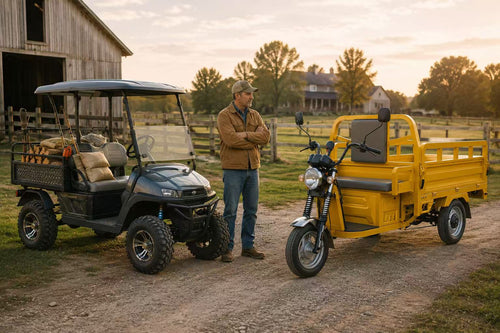
A farm cargo tricycle can be useful for moving tools, feed, crops, plant trays, buckets, and supplies around a property. But before choosing one, buyers should look beyond the vehicle name.
The real question is simple:
Can the vehicle handle the farm paths, surface conditions, and payload you use every day?
On many small farms, ranch support areas, nurseries, greenhouses, and produce operations, the route is not always smooth pavement. The vehicle may need to move across gravel yards, packed dirt, greenhouse paths, narrow farm rows, equipment areas, and mixed work surfaces. That is why terrain and payload should be checked together.
A farm cargo tricycle is not just about carrying cargo. It is about carrying the right cargo on the right surface at the right speed.
Why Terrain Matters for a Farm Cargo Tricycle
Farm work rarely happens on perfect roads. Even when the property is well maintained, daily routes may include gravel, compacted dirt, concrete pads, uneven work yards, greenhouse entrances, and narrow service lanes.
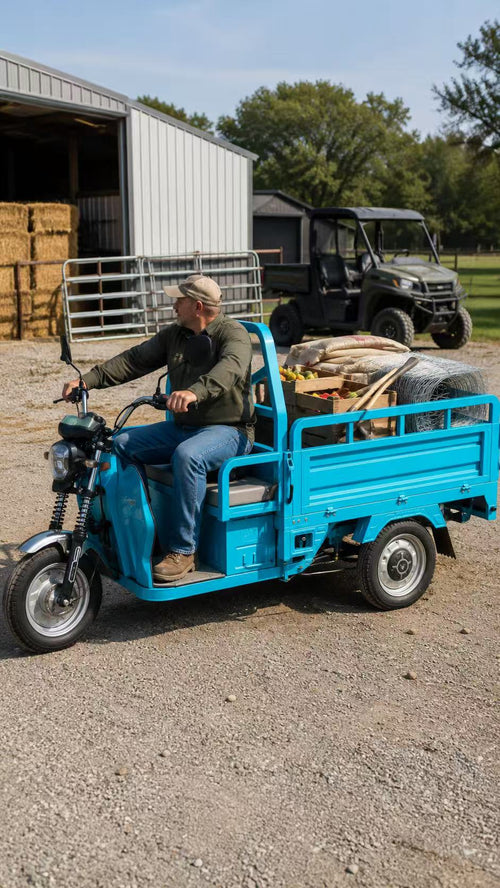
A compact cargo tricycle can be very useful in these areas when the surface is controlled and the route is short. It can help move materials between barns, sheds, packing zones, nursery benches, feed storage areas, and growing areas without using a full-size truck for every small load.
But the buyer should not assume every farm surface is suitable. Deep mud, steep pasture, loose sand, large rocks, and severely uneven ground may require a different type of vehicle.
Before buying, start by looking at the actual route, not just the product photo.
Common Farm Surfaces to Check
A farm cargo tricycle is usually best suited for practical internal routes such as:
gravel yards
packed dirt paths
concrete pads
greenhouse floors
nursery aisles
farm lanes
equipment shed areas
feed storage zones
produce handling areas
These routes are common on small farms and work properties. They are not always smooth, but they are predictable enough for low-speed utility movement.
The more difficult surfaces include:
deep mud
soft pasture
steep hills
very loose gravel
rough field ruts
wet uneven ground
large rocks or roots
If your daily route includes these harder conditions, you should check tire type, ground clearance, motor power, load weight, and how often the vehicle will run through those areas.
Payload Is Not Just a Number
Payload capacity is important, but it should not be judged only by the largest number in a product description.
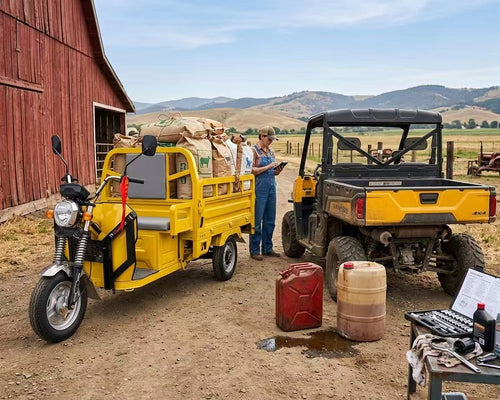
A farm cargo tricycle may carry different types of materials throughout the day. Some loads are bulky but light. Others are compact but heavy. For example, plant trays and empty crates may take up bed space without adding much weight. Feed bags, fertilizer bags, soil bags, tools, and buckets can add weight quickly.
The buyer should think about the typical load, not just the maximum load.
Ask:
What do you move most often?
How heavy is a normal trip?
How many trips happen per day?
Is the cargo loose, bagged, boxed, or stacked?
Does the load need to stay stable on gravel or dirt?
A useful farm cargo tricycle should match the real daily payload, not just a one-time maximum number.
Crops, Feed, Tools, and Equipment Need Different Handling
Different farm materials create different transport needs.
Crops and produce crates often need stable, organized movement. Feed bags and fertilizer bags need a bed that can support concentrated weight. Tools and small equipment may need enough space so they do not shift around during transport. Plant trays may need a flatter loading area and careful placement.
This is why the cargo bed, side rails, and load balance matter.
A farm cargo tricycle with a simple open bed can be useful because it handles mixed farm materials. It can carry tools in the morning, feed bags at noon, and produce crates later in the day. But the operator still needs to load the bed properly and avoid placing too much weight high or far to one side.
For rough farm paths, load balance becomes even more important.
Why Low-Speed Utility Work Is Different
A farm cargo tricycle is usually not chosen for high-speed travel. Its value is in low-speed internal transport.
On private farm property, many jobs involve short routes and frequent stops. The vehicle may move from a greenhouse to a shed, from a feed area to a livestock pen, or from a harvest area to a packing table. These trips do not need highway speed. They need control, stability, and practical cargo movement.
Low-speed operation can be an advantage when workers are moving near people, animals, buildings, gates, pallets, and work areas.
For this reason, buyers should focus less on top speed and more on route control, cargo stability, and how the vehicle behaves with a real farm load.
When Electric Makes Sense
An electric farm cargo tricycle can make sense when the work happens mostly on private property and the routes are repeated every day.
Electric operation may reduce fuel handling, lower daily running cost, and provide quieter movement around barns, greenhouses, livestock areas, and work buildings. It can also make sense for farms that prefer simpler low-speed transport instead of a larger gas-powered vehicle for every small job.
But buyers should still check battery range, charging routine, and whether the vehicle can complete a normal workday.
The right question is not only “Is it electric?”
The better question is:
Can it carry the daily payload across the actual farm route before it needs to recharge?
When a Farm Cargo Tricycle Is a Good Fit
A farm cargo tricycle may be a good fit when:
the work happens on private property
the route is short or moderate
the surface is gravel, packed dirt, concrete, greenhouse floor, or farm lane
the cargo is tools, feed, crops, plant trays, buckets, or supplies
the load is moderate but repeated
the farm needs a compact vehicle for internal movement
the operator wants a simple cargo bed instead of a large passenger vehicle
This kind of vehicle can be useful in small farms, nurseries, greenhouses, orchards, produce handling areas, livestock support zones, and property maintenance routes.
It is especially useful when the work involves moving one practical load at a time.
When It May Not Be the Right Choice
A farm cargo tricycle is not the best tool for every job.
It may not be suitable for:
deep mud
steep rough pasture
heavy towing
large commercial field hauling
highway driving
very long route distances
large rocks, roots, or severe uneven terrain
oversized loads that exceed safe cargo bed use
This does not mean the vehicle is not useful. It means the buyer should match the vehicle to the correct work area.
A compact cargo tricycle works best as an internal farm transport tool, not as a full replacement for a tractor, pickup, or heavy-duty UTV.
What to Check Before Buying
Before choosing a farm cargo tricycle, check these practical points:
1. Normal route surface
Is the daily route gravel, packed dirt, concrete, greenhouse floor, or rough pasture?
2. Estimated daily payload
How much weight will the vehicle carry in a normal trip?
3. Cargo type
Will it move crops, feed bags, tools, equipment, buckets, plant trays, or mixed supplies?
4. Cargo bed layout
Can the bed hold your most common materials safely and conveniently?
5. Tire and ground condition
Are the tires and ground clearance suitable for your actual work areas?
6. Route distance
Can the battery range or fuel setup support your daily movement?
7. Turning space
Can the vehicle move through narrow farm rows, shed areas, gates, and work lanes?
8. Maintenance support
Can a local farm equipment, motor, or small machinery repair technician help if service is needed?
These questions are more useful than choosing only by appearance or maximum payload claims.
Final Thought
A farm cargo tricycle can be a practical tool for moving crops, feed, tools, and supplies around a property. But the best choice depends on terrain and payload.
If your daily routes are short, your surfaces are controlled, and your loads are moderate but repeated, a compact electric farm cargo tricycle can support daily work very well. If your route includes deep mud, steep rough pasture, heavy towing, or severe off-road conditions, a different vehicle may be needed.
The right vehicle is not always the largest one. It is the one that fits the actual farm path, the real payload, and the daily work routine.