Electric Utility Vehicle for Greenhouse Transportation and Farm Material Handling
Share
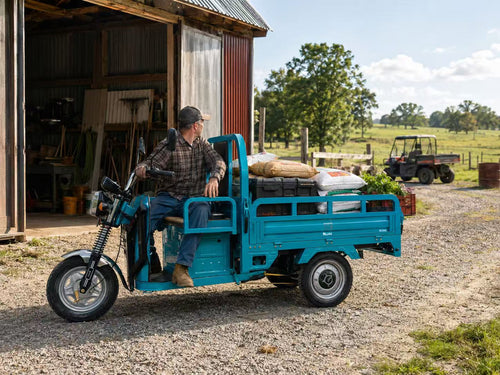
Modern agricultural operations depend on efficient transportation every day. From greenhouses and nurseries to orchards, farms, and ranches, operators need reliable equipment to move materials, supplies, tools, and harvested products between different work areas.
While full-size UTVs are widely used for heavy-duty off-road tasks, many agricultural transportation jobs do not require a large vehicle. Daily farm operations often involve short-distance hauling, repeated loading and unloading, and navigating narrow spaces where compact maneuverability is more important than maximum speed.
An electric utility vehicle provides a practical solution for these applications. With quiet operation, low maintenance requirements, and efficient material handling capability, electric work vehicles help farms and agricultural businesses improve productivity while reducing operating costs.
For greenhouses, orchards, nurseries, and small farms, the right electric utility vehicle should be selected based on real working requirements, including payload capacity, cargo bed design, battery range, and operating environment.
Why Electric Utility Vehicles Are Useful for Greenhouse and Farm Transportation
Agricultural transportation is not always about moving the heaviest loads. Many daily tasks require frequent movement of smaller materials across short distances.
Common farm transportation tasks include:
- Moving seedling trays and plants in greenhouses
- Transporting soil, fertilizer, and irrigation supplies
- Carrying tools and maintenance equipment
- Moving harvested crops and containers
- Transporting animal feed and ranch supplies
- Removing agricultural waste and materials
For these applications, a compact electric utility vehicle can reduce manual labor while providing more flexibility than traditional carts or oversized utility vehicles.
Quiet Operation for Greenhouses and Livestock Areas
One of the biggest advantages of electric utility vehicles in agriculture is quiet operation.
Many agricultural environments require vehicles that can operate without creating excessive noise. Greenhouses, horse farms, and livestock operations benefit from transportation equipment that allows workers to complete daily tasks with less disturbance.
Electric utility vehicles are suitable for:
- Greenhouse transportation
- Nursery operations
- Horse farm maintenance
- Livestock support areas
- Property and agricultural facility maintenance
Compared with gasoline-powered vehicles, electric vehicles produce significantly less operating noise, making them a practical option for environments where quiet operation matters.
No Exhaust for Indoor Agricultural Environments
Greenhouses and agricultural buildings often require equipment that can operate in enclosed or semi-enclosed areas.
Electric utility vehicles produce no direct exhaust emissions during operation, making them suitable for applications where clean transportation is important.
Common applications include:
- Moving plants inside greenhouse structures
- Transporting supplies between growing areas
- Supporting indoor agricultural operations
- Moving equipment around barns and storage buildings
For growers who regularly work in controlled environments, an electric utility vehicle provides a cleaner transportation solution compared with traditional fuel-powered equipment.
Lower Maintenance Compared with Gas-Powered Utility Vehicles
Maintenance cost is an important consideration for farms and agricultural businesses that rely on transportation equipment every day.
Traditional gasoline-powered utility vehicles require regular maintenance such as:
- Engine oil changes
- Fuel system maintenance
- Spark plug replacement
- Engine servicing
Electric utility vehicles use electric motors and battery systems, reducing many mechanical maintenance requirements.
For farms that use vehicles frequently for daily transportation, lower maintenance requirements can help reduce downtime and simplify ownership.
Common Agricultural Applications for Electric Utility Vehicles
Greenhouse Transportation
Greenhouses require frequent movement of plants, growing materials, and equipment.
A compact electric utility vehicle can help operators transport:
- Seedling trays
- Plant containers
- Potting soil
- Fertilizer bags
- Irrigation equipment
- Gardening tools
Compared with manual carts, electric transportation equipment helps reduce physical labor and improves efficiency during repeated daily tasks.
The compact size of many electric utility vehicles also makes them suitable for narrow pathways and controlled growing environments.
Orchard and Nursery Material Handling
Orchards and nurseries often require transportation between planting areas, storage locations, and loading zones.
Typical applications include:
- Moving harvested crops
- Carrying containers and plant materials
- Transporting pruning equipment
- Supporting seasonal farm work
For these operations, vehicle maneuverability and cargo capacity are often more important than high-speed performance.
A properly configured electric utility vehicle can provide a balance between carrying capability and easy operation.
Farm and Ranch Support Operations
Farms and ranches have many daily transportation requirements beyond field work.
Electric utility vehicles can support:
- Feed transportation
- Fence maintenance
- Tool movement
- Equipment delivery
- Property maintenance
The quiet operation of electric vehicles is especially useful around livestock areas where excessive noise may disturb animals.
Electric Utility Vehicle vs Full-Size UTV for Agricultural Use
Both electric utility vehicles and UTVs can support agricultural operations, but they are designed for different working conditions.
Full-size electric UTVs are generally designed for:
- Rough terrain
- Higher-speed travel
- Heavy towing
- Large-scale agricultural operations
Compact electric utility vehicles are often better suited for:
- Greenhouses
- Orchards
- Nurseries
- Small farms
- Daily material transportation
- Narrow working areas
The right choice depends on the actual tasks performed every day.
For operators who mainly need to move supplies, tools, plants, and materials around a property, a compact electric utility vehicle may provide a more practical and cost-effective solution.
Choosing the Right Electric Utility Vehicle for Farm Operations
Selecting the correct electric utility vehicle depends on the specific working environment and transportation requirements.
Important factors include:
Payload Capacity
Payload capacity determines how much material the vehicle can safely transport.
Agricultural operators should consider the weight of:
- Soil and fertilizer
- Plants and containers
- Feed supplies
- Tools and equipment
- Harvested products
A vehicle with the correct payload capacity helps improve efficiency while avoiding unnecessary trips.
Cargo Bed Design
The cargo bed is one of the most important features for agricultural transportation.
Different operations may require different configurations:
- Standard cargo beds for daily transportation
- Extended cargo beds for larger loads
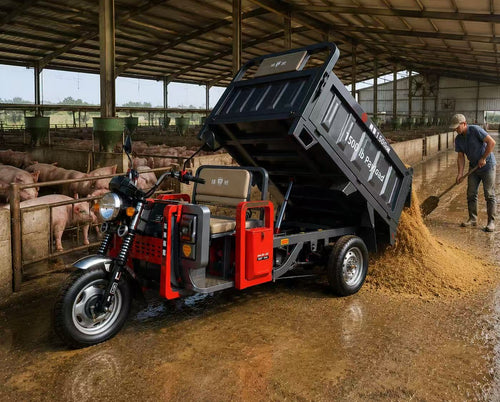
- Dump beds for easier unloading of soil, waste, and bulk materials
For farms and landscaping operations, a practical cargo design can significantly reduce manual handling.
Battery Range and Charging Requirements
Battery performance affects how efficiently an electric utility vehicle can support daily operations.
Operators should consider:
- Daily travel distance
- Charging availability
- Working hours
- Battery type
For regular farm transportation, choosing a vehicle with sufficient range helps ensure reliable operation throughout the workday.
Vehicle Size and Maneuverability
Many agricultural environments require vehicles that can operate in limited spaces.
Greenhouses, orchards, and nurseries often have:
- Narrow pathways
- Tight turning areas
- Restricted access points
A compact electric utility vehicle with good maneuverability can complete tasks that larger vehicles may struggle with.
Why Compact Electric Utility Vehicles Are Practical for Modern Agriculture
Agricultural transportation needs continue to change. Many farms do not need a large off-road vehicle for every task.
Instead, operators need efficient equipment that can handle everyday transportation requirements with lower operating costs.
Compact electric utility vehicles provide advantages including:
- Quiet operation around animals
- Reduced maintenance requirements
- No direct exhaust emissions
- Easy material transportation
- Flexible use across different agricultural environments
For greenhouses, farms, orchards, nurseries, and ranches, electric utility vehicles offer a practical way to improve daily productivity while reducing the effort required for repetitive transportation work.
Conclusion
Electric utility vehicles are becoming an important transportation solution for modern agricultural operations.
From greenhouse transportation and nursery work to orchard harvesting and ranch maintenance, these vehicles provide a flexible alternative for moving materials efficiently.
By considering payload capacity, cargo bed design, battery range, and working environment, agricultural operators can select an electric utility vehicle that matches their real operational needs.
For small farms, greenhouses, orchards, and agricultural businesses looking for a reliable material handling solution, a compact electric utility vehicle can help reduce manual labor and improve everyday efficiency.
Choosing the Right Electric Utility Vehicle for Farm Operations
Selecting the correct electric utility vehicle depends on the specific working environment and transportation requirements.
Important factors include:
Payload Capacity
Payload capacity determines how much material the vehicle can safely transport.
Agricultural operators should consider the weight of:
- Soil and fertilizer
- Plants and containers
- Feed supplies
- Tools and equipment
- Harvested products
A vehicle with the correct payload capacity helps improve efficiency while avoiding unnecessary trips.
Cargo Bed Design
The cargo bed is one of the most important features for agricultural transportation.
Different operations may require different configurations:
- Standard cargo beds for daily transportation
- Extended cargo beds for larger loads
- Dump beds for easier unloading of soil, waste, and bulk materials
For farms and landscaping operations, a practical cargo design can significantly reduce manual handling.
Battery Range and Charging Requirements
Battery performance affects how efficiently an electric utility vehicle can support daily operations.
Operators should consider:
- Daily travel distance
- Charging availability
- Working hours
- Battery type
For regular farm transportation, choosing a vehicle with sufficient range helps ensure reliable operation throughout the workday.
Vehicle Size and Maneuverability
Many agricultural environments require vehicles that can operate in limited spaces.
Greenhouses, orchards, and nurseries often have:
- Narrow pathways
- Tight turning areas
- Restricted access points
A compact electric utility vehicle with good maneuverability can complete tasks that larger vehicles may struggle with.
Why Compact Electric Utility Vehicles Are Practical for Modern Agriculture
Agricultural transportation needs continue to change. Many farms do not need a large off-road vehicle for every task.
Instead, operators need efficient equipment that can handle everyday transportation requirements with lower operating costs.
Compact electric utility vehicles provide advantages including:
- Quiet operation around animals
- Reduced maintenance requirements
- No direct exhaust emissions
- Easy material transportation
- Flexible use across different agricultural environments
For greenhouses, farms, orchards, nurseries, and ranches, electric utility vehicles offer a practical way to improve daily productivity while reducing the effort required for repetitive transportation work.
Conclusion
Electric utility vehicles are becoming an important transportation solution for modern agricultural operations.
From greenhouse transportation and nursery work to orchard harvesting and ranch maintenance, these vehicles provide a flexible alternative for moving materials efficiently.
By considering payload capacity, cargo bed design, battery range, and working environment, agricultural operators can select an electric utility vehicle that matches their real operational needs.
For small farms, greenhouses, orchards, and agricultural businesses looking for a reliable material handling solution, a compact electric utility vehicle can help reduce manual labor and improve everyday efficiency.