Electric Farm Utility Vehicle – Complete Transport Solution for Modern Farms, Ranches, Orchards and Greenhouses
Share
Electric Farm Utility Vehicle – Complete Transport Solution for Modern Farms, Ranches, Orchards and Greenhouses
Modern farms are changing. Across the United States, farmers, ranch owners, greenhouse operators, and agricultural businesses face the same daily challenge:
How to move materials efficiently across short distances without relying on expensive full-size trucks, tractors, or fuel-powered equipment.
Most farm transportation work does not happen on highways. It happens within a 50KM working area:
* moving animal feed
* transporting harvested crops
* carrying tools and repair equipment
* moving fertilizer and supplies
* cleaning barns and livestock areas
* supporting daily farm maintenance
For these repeated short-distance jobs, an electric farm utility vehicle provides a more practical and lower-cost solution.
⸻
Why Traditional Farm Transport Creates Problems
Many farms depend on pickup trucks, tractors, ATVs, and manual carts for daily material movement.
However, these solutions often create problems:
* High fuel expenses
* Frequent engine maintenance
* Oversized vehicles for small daily tasks
* Limited access inside barns, greenhouses, and narrow farm paths
* Unnecessary labor for simple transportation work
A large truck may be useful for heavy road transport, but many farm jobs only require moving materials from one area to another inside the property.
This is where compact electric utility vehicles become valuable.
⸻
Electric Farm Utility Vehicle Applications
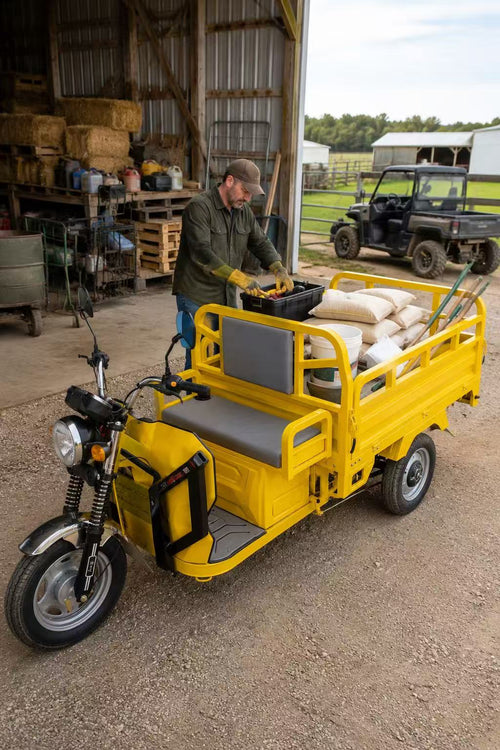
1. Livestock Farms and Ranch Operations
Ranches require constant movement between feeding areas, barns, fences, and processing locations.
Electric utility vehicles can help transport:
* animal feed
* hay
* fencing tools
* water containers
* farm supplies
For cattle farms, dairy farms, horse farms, and poultry operations, electric transport vehicles reduce repeated manual hauling.
⸻
2. Orchard and Fruit Farm Transportation
During harvest seasons, speed and efficiency directly affect productivity.
Electric farm utility vehicles are suitable for:
* fruit collection
* moving harvest crates
* transporting workers’ tools
* carrying packaging materials
Compared with larger vehicles, compact electric vehicles can move through orchard rows while reducing unnecessary ground disturbance.
⸻
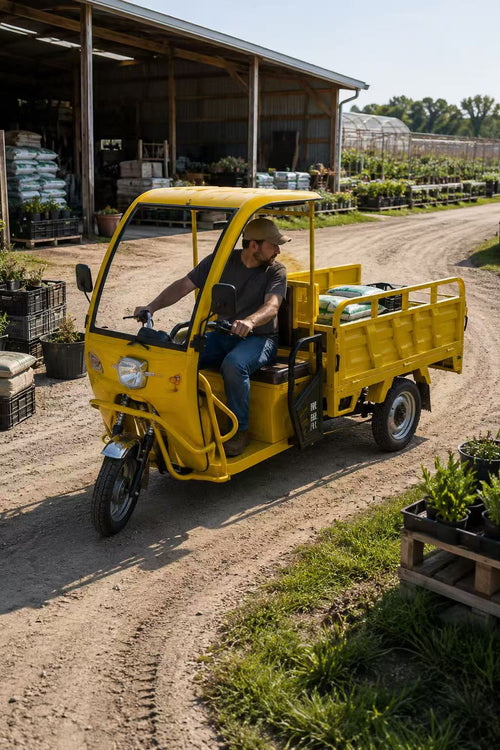
3. Greenhouse and Nursery Operations
Greenhouses and nurseries require clean, quiet, and flexible transportation.
Electric utility vehicles are commonly used for:
* moving plants
* transporting soil
* carrying pots and trays
* daily facility maintenance
Zero-emission electric operation makes them suitable for enclosed agricultural environments.
⸻
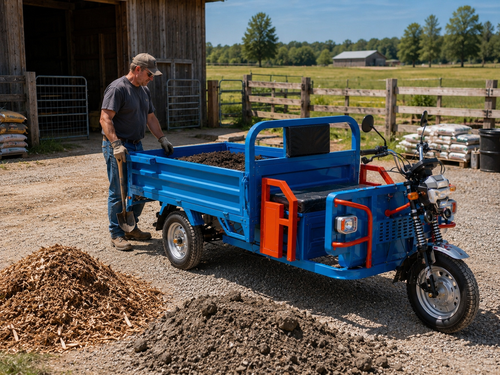
4. Small Farm and Daily Maintenance Work
Not every farm needs a large tractor for every job.
Small farms need affordable equipment that can handle daily tasks:
* moving supplies
* carrying equipment
* property maintenance
* seasonal agricultural work
A farm utility vehicle creates a balance between cost, flexibility, and working efficiency.
⸻
Why Choose an Electric Farm Utility Vehicle
Key advantages:
* Lower operating cost compared with gasoline equipment
* Simple electric drivetrain
* Reduced daily maintenance
* Compact size for narrow spaces
* Strong cargo capability
* Suitable for multiple agricultural industries
Instead of purchasing different machines for every task, farms can use one flexible electric transport platform.
⸻
A Complete Agricultural Mobility Solution
The future of farm transportation is not only about bigger machines.
It is about choosing the right vehicle for the right job.
Electric farm utility vehicles provide an efficient solution for modern agriculture, helping farms improve productivity while reducing unnecessary operating costs.
From ranches and orchards to greenhouses and small farms, electric utility vehicles are becoming an important part of daily agricultural transportation.