Will an Electric Cargo Trike Fit Narrow Wholesale Market Aisles?
Share
Wholesale markets are busy, crowded, and often difficult to move through during working hours. Vendors may have enough goods, enough customers, and enough workers, but one practical question can still decide whether a transport vehicle is useful:
Will it actually fit the market route?
For many buyers considering an electric cargo trike, a compact electric utility vehicle, or a wholesale market utility vehicle, this question matters before anything else. The vehicle may look useful on paper, but the real test happens inside the market. Can it move through the aisle? Can it turn near a cold room door? Can it pass parked carts? Can it wait near a loading area without blocking other vendors?
This is why aisle fit and turning space should be part of every buying decision.
In many wholesale markets, the transport problem is not only about load capacity. It is also about movement space. A vehicle that is too large for the daily route can create more problems than it solves. A vehicle that is too small may not carry enough goods to reduce manual trips. The goal is to find a practical middle point between cargo capacity and maneuverability.
A compact electric cargo trike can be useful when the market route is too long for repeated hand-cart trips, but too narrow or crowded for larger equipment. However, vendors should first understand their own aisles, turning points, waiting areas, and loading paths.
Why Aisle Fit Matters Before Buying
In a wholesale market, goods rarely move in a straight line from one open warehouse door to one empty truck. Real movement is more complicated.
Workers may need to travel between produce stalls, seafood areas, cold rooms, side storage corners, customer pickup points, and loading zones. Along the way, they may pass other vendors, hand carts, stacked crates, pallet jacks, parked equipment, wet floor areas, and customers walking through the aisle.
A transport vehicle must fit this environment.
If the aisle is too narrow, the vehicle may slow down traffic. If the turning space is too tight, workers may need to back up several times. If the vehicle has nowhere to wait, it may block the customer pickup area. These problems can reduce the value of the equipment, even if the vehicle itself has good load capacity.
That is why buyers should not only ask, “How much can it carry?” They should also ask, “Can it move through my real market layout?”
This is especially important for produce markets, seafood wholesale markets, restaurant supply centers, meat distribution areas, and indoor market warehouses where floor space is always under pressure.
The Real Route Is More Important Than the Product Photo
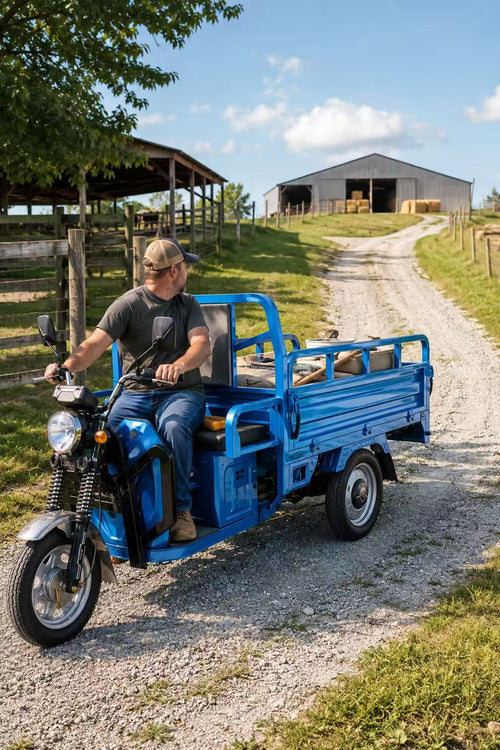
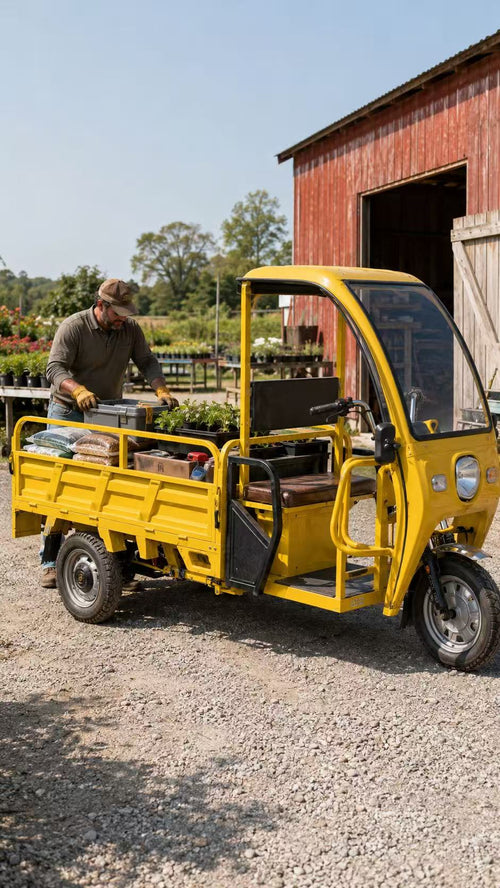
A product photo can show the vehicle shape, cargo bed, wheels, handlebar area, and basic structure. But it cannot show the buyer’s real route.
Before choosing a market transport vehicle, vendors should walk the same path that workers use every day. This route may include the front stall, cold room entrance, storage rack, aisle corner, customer pickup lane, and loading zone. The buyer should look at the narrowest point, not only the widest point.
The narrowest point may be where the problem happens.
It could be a cold room doorway with plastic curtains. It could be a tight turn near stacked produce boxes. It could be a crowded seafood aisle with wet floors and foam boxes. It could be a loading lane where customers and workers stand close to the vehicle path.
A compact electric utility vehicle should match these real working points. If it fits only in the open area but not in the route workers actually use, it may not solve the daily transport problem.
Turning Space Is Often the Hidden Issue
Aisle width is important, but turning space is just as important.
Many vendors only think about whether the vehicle can drive forward through a passage. But wholesale market work involves frequent stops, turns, and short movements. A worker may need to turn near a stall, reverse away from a cold room, move around a hand cart, or position the vehicle near a loading point.
If the turning space is too limited, the vehicle becomes harder to use during peak hours.
This does not mean every market needs a tiny vehicle. It means the vehicle size should match the daily turning points. A small electric work vehicle with a compact body can be more practical than a larger cart or truck when the route includes repeated turns, shared aisles, and limited waiting space.
For buyers searching for an electric cargo trike for narrow market aisles, the turning path is one of the most important things to check before purchase.
Where Space Problems Usually Appear
Wholesale market space problems usually appear in predictable places.
They often happen near cold room doors, where workers move chilled goods into the aisle. They also happen near customer pickup areas, where buyers wait with carts, vans, or small trucks. In produce markets, the problem may happen near stacked crates and temporary display zones. In seafood markets, the problem may happen near wet floors, foam boxes, ice containers, and narrow work paths.
These areas are active, not empty.
A wholesale market utility vehicle needs to move through these areas without making the workflow harder. The best vehicle is not always the largest one. The best vehicle is the one that can carry a useful load while still fitting the real operating space.
For example, a vendor may not need a full-size warehouse vehicle to move several boxes from storage to pickup. A compact electric cargo trike may be enough if it can pass through the aisle, turn safely, and stop without blocking other work.
This is where the balance between size and usefulness becomes important.
Why Hand Carts Still Matter
A compact electric cargo trike does not remove the need for hand carts. In many wholesale markets, hand carts are still useful for very small moves, quick adjustments, and tight spaces where no vehicle should enter.
The goal is not to replace every manual tool.
The goal is to reduce repeated heavy movement on routes where workers lose time every day. If a route is too short or too narrow, a hand cart may still be the best tool. But if workers are making repeated trips across a longer aisle, between a cold room and a loading zone, or from a stall to a customer pickup point, a small electric work vehicle may support the workflow better.
This is why vendors should think in layers.
Hand carts can handle the smallest movements. Forklifts can handle pallets and heavy warehouse work. A compact electric utility vehicle can fit the middle layer: short-distance transport for market vendors who need more carrying ability than a cart, but less size than large equipment.
What Buyers Should Check Before Choosing a Vehicle
Before buying an electric utility trike for wholesale market work, a vendor should check several practical points.
First, measure or estimate the narrowest aisle the vehicle must pass through. Do not only look at the main walkway when it is empty. Look at the aisle during real working hours, when boxes, carts, customers, and workers are present.
Second, check the turning points. A vehicle may fit in a straight line but still struggle when turning near a stall, cold room, or loading area.
Third, think about where the vehicle will wait when it is not moving. In crowded wholesale markets, parking space matters. A vehicle that blocks a main aisle may create frustration for other vendors.
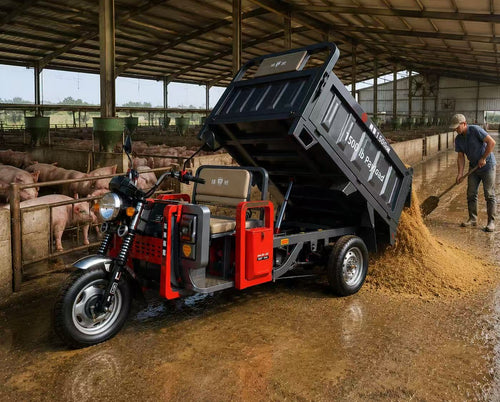
Fourth, match the cargo bed to the actual goods. Produce crates, seafood boxes, frozen cartons, packaging supplies, and restaurant supply orders all need a stable, level loading area. For this type of work, a flat cargo bed is usually more suitable than a raised dump position.
Finally, consider the daily number of trips. If the vehicle only saves one small trip a week, it may not matter much. But if it reduces repeated movement every morning, the value becomes clearer.
A Practical Fit for Narrow Market Routes
A compact electric cargo trike can be valuable when it fits the route correctly. It gives vendors a way to move goods across short distances without relying only on manual carts or waiting for larger equipment.
It can support common wholesale market tasks such as moving produce crates, seafood boxes, foam containers, cardboard cartons, packaging supplies, small mixed orders, and restocking items between different work points.
The key is not only the vehicle. The key is the match between the vehicle and the market.
A vendor with narrow aisles should look for a compact body, stable cargo bed, practical turning ability, and enough load space for daily partial loads. A vendor with longer internal routes should also think about how much walking and pushing the vehicle can reduce during busy hours.
When the vehicle fits the real route, it becomes part of the workflow instead of an obstacle inside the market.
Final Thought
Before choosing a wholesale market utility vehicle, buyers should look beyond the basic product specifications. Load capacity matters, but aisle fit, turning space, and route layout matter just as much.
A vehicle that cannot move through the real market path will not solve the problem. A vehicle that fits the aisle, turns in the right places, and carries the right type of load can make daily transport easier.
For vendors in produce markets, seafood wholesale markets, restaurant supply centers, and indoor market warehouses, a compact electric cargo trike can be a practical solution when the space is tight but the work is frequent.
The best question is not simply, “Can this vehicle carry my goods?”
The better question is, “Can this vehicle carry my goods through the route I use every day?”