Firm Ground First: Safe Hydraulic Dumping on Gravel, Dirt, and Farm Roads
Share
Safe hydraulic dumping does not begin with the dump bed. It begins with the ground under the vehicle.
A hydraulic dump utility vehicle can unload soil, gravel, mulch, compost, manure, wood chips, and other loose materials more efficiently, but the unloading area must be chosen carefully. When the dump bed rises, the load shifts, the center of gravity changes, and the vehicle becomes more sensitive to the ground surface. A stable unloading area helps the operator control the vehicle, the material flow, and the dumping process.
The safest unloading area is not always the closest unloading area. Before raising a hydraulic dump bed, the operator should first judge the ground.
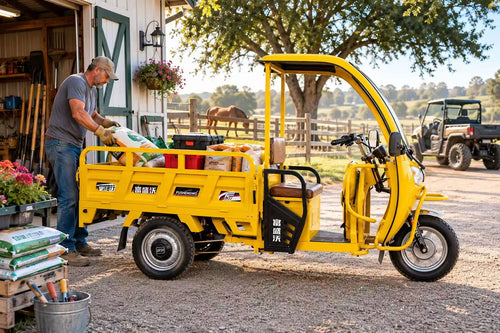
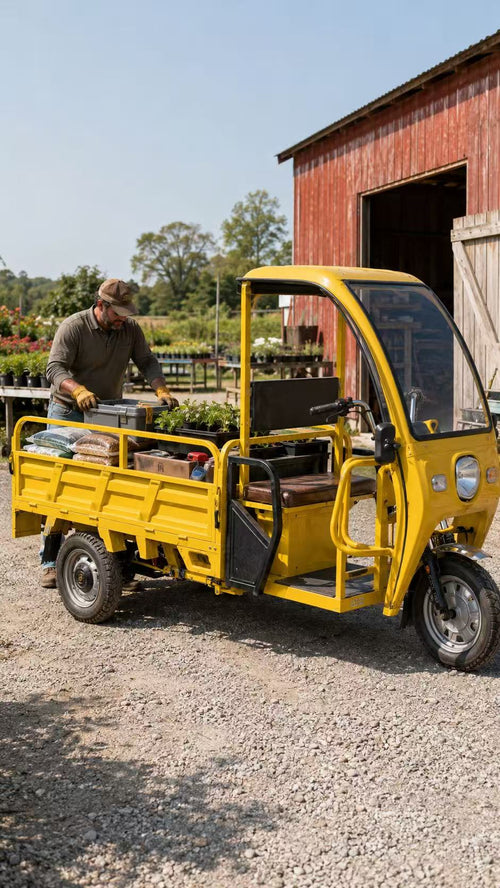
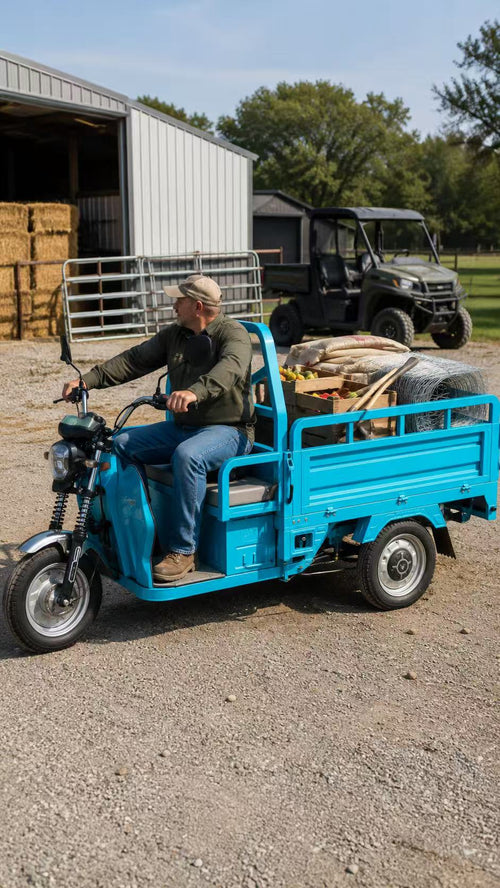
Firm gravel ground is often a practical unloading surface for farms, ranches, landscaping yards, construction sites, and property maintenance areas. It gives the tires better support than soft mud and usually provides enough traction for slow, controlled movement. Packed dirt roads and level farm lanes can also work well when they are dry, firm, and free of deep ruts.
Concrete pads, loading yards, barn aprons, warehouse docks, and flat ranch work areas are usually easier to manage because the vehicle remains more stable while loaded. These surfaces help reduce unwanted shifting when the dump bed begins to rise. They also make it easier for loose materials to slide out from the rear of the cargo bed in a predictable pattern.
Soft ground creates more risk. Mud, wet grass, loose sand, deep ruts, and unstable pasture edges can allow the tires to sink, slide, or lean. This becomes more serious when the bed is raised because the load is no longer sitting low and flat. Even a properly balanced load can become harder to control if one wheel is lower than the others or if the vehicle is leaning sideways.
Slopes require even more caution. A hydraulic dump bed should not be raised casually on steep hills, side slopes, or uneven inclines. When the bed lifts, material such as wet soil, gravel, manure, compost, or clay may shift faster than expected. On a side slope, that shifting can make the vehicle feel unstable. On a downhill angle, material may rush out too quickly. On an uphill angle, the load may not slide smoothly from the rear.
For this reason, operators should avoid dumping on steep slopes whenever possible. If the job area is uneven, the better choice is often to move the vehicle to a flatter section, unload safely, and then spread the material later if needed. A few extra minutes choosing a safer unloading area can prevent wasted material, equipment strain, and unsafe work conditions.
Slow forward movement can be useful during hydraulic dumping, but only on the right ground. When the dump bed is raised to a natural working angle, the vehicle may move forward very slowly and safely, allowing loose material to slide out from the rear of the cargo bed by gravity. This can create a smoother, more continuous pile behind the vehicle instead of one steep mound.
However, this slow movement should only happen when the surface is firm, level, and clear. The operator needs enough forward space, good tire support, and no people or obstacles behind the dump bed. The vehicle should never move quickly while unloading. The motion should look controlled, deliberate, and safe.
Ground conditions also affect different materials in different ways. Dry mulch, wood chips, leaves, and compost may unload easily on many surfaces because they are relatively light. Wet soil, clay, gravel, sand, manure, and construction debris place more stress on the vehicle and require a more stable unloading area. The denser the material, the more important the ground becomes.
Before unloading, the operator should inspect both the rear unloading zone and the forward travel path. The rear area must be clear because loose material will exit from the tailgate area. The forward path must also be clear if the vehicle will move slowly during dumping. A safe unloading plan considers both directions, not only the place where the material will land.
It is also important to avoid dumping where the vehicle cannot safely leave afterward. A soft area may look acceptable before unloading, but after the load shifts and the ground is disturbed, the vehicle may be harder to move. Operators should consider whether the tires will stay supported after the material is dumped and whether there is enough room to lower the bed, turn, and drive away safely.
A practical unloading area should meet several conditions:
The ground should be firm enough to support the loaded vehicle.
The vehicle should sit as level as possible before the bed is raised.
The rear dumping zone should be clear of people, animals, tools, and equipment.
The front path should be clear if slow forward movement is used.
The material should be able to exit only from the rear of the cargo bed.
The operator should be able to lower the bed fully before driving away.
These checks are simple, but they make hydraulic dumping safer and more efficient.
For farms, ranches, horse stables, nurseries, construction sites, landscaping crews, wholesale markets, and property maintenance teams, the best unloading area is the one that supports controlled work. A hydraulic dump utility vehicle is designed to reduce manual labor, but the operator still needs to choose the right ground before raising the bed.
Firm ground first is a simple rule that prevents many problems. When the surface is stable, the load is balanced, the rear area is clear, and the vehicle moves forward only very slowly when appropriate, hydraulic dumping becomes smoother, safer, and more productive.