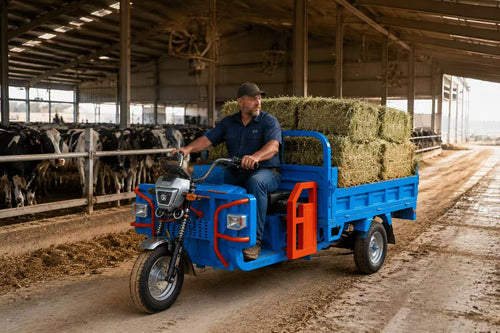
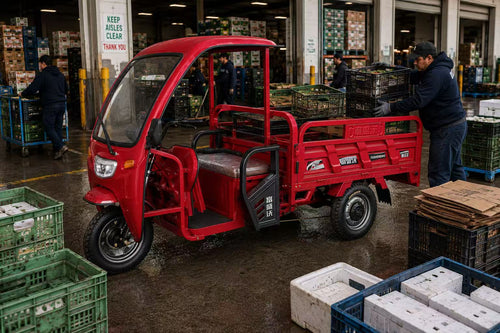
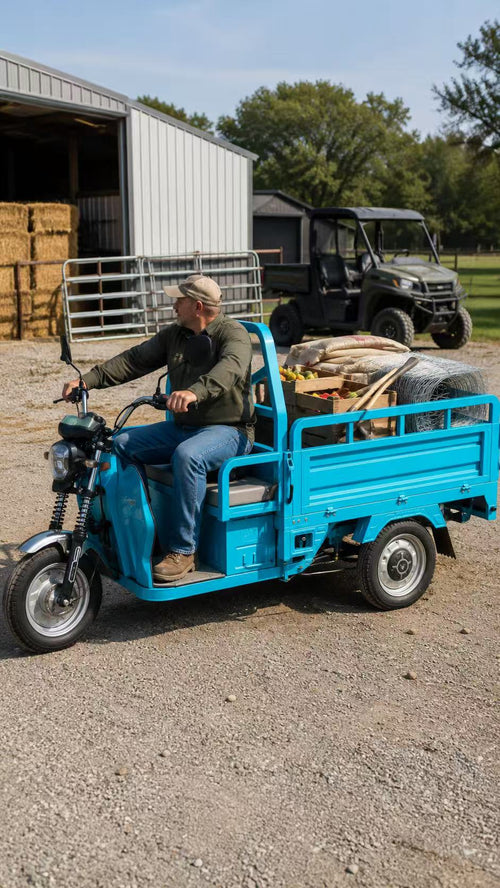
End-of-Day Checks for Electric Dump Carts After Farm, Ranch, and Landscaping Work
Share
An electric dump cart works hardest during the day, but many long-term problems begin after the job is finished. Soil stays inside the cargo bed. Gravel gets trapped near corners. Wet manure, compost, mulch, and wood chips stick to surfaces. Mud builds up around tires. Battery charging is delayed. Small issues that could have been noticed at the end of the day become problems the next morning.
That is why end-of-day checks matter.
For farms, ranches, horse stables, landscaping crews, nurseries, construction cleanup teams, and property maintenance workers, an electric dump cart is not just a vehicle. It is part of the daily material handling workflow. If it is not ready the next day, the whole work schedule can slow down.
The goal of an end-of-day check is not complicated maintenance. It is a simple routine that helps keep the vehicle clean, charged, safe, and ready for the next load.
Why should operators inspect an electric dump cart after daily work?
Daily inspection helps catch small issues before they interrupt the next workday. A loose connection, low battery, dirty cargo bed, damaged tire, sticky dump bed, or unusual sound may not seem urgent at the end of a long day. But the next morning, when the vehicle is needed for manure hauling, soil transport, mulch delivery, gravel movement, compost cleanup, or ranch supply runs, those small problems can cause delays.
End-of-day equipment checks are especially useful when the vehicle is used for repeated short-distance hauling. A farm utility hauler may complete many trips between a barn, compost pile, feed storage area, driveway repair section, stable lane, or landscaping bed. The more often the vehicle is used, the more important simple daily care becomes.
Should the cargo bed be cleaned after hauling manure, soil, mulch, or compost?
Yes. The cargo bed should be checked and cleaned after hauling wet soil, manure, compost, mulch, wood chips, bedding waste, grass clippings, gravel, sand, or construction debris.
Loose bulk materials can leave residue inside the dump bed. Wet manure and compost may create odor and buildup. Soil and clay can dry and harden. Gravel and sand can collect in corners. Wood chips and mulch can trap moisture. If these materials are left in the cargo bed for too long, they can make future unloading less smooth and create unnecessary cleanup later.
A clean cargo bed also helps the hydraulic dump bed work more predictably. Loose material should slide from the rear during dumping. If old material is stuck in the bed, new loads may not flow as cleanly.
What should be checked around the hydraulic dump bed?
After daily work, the operator should look around the hydraulic dump bed, lifting points, hinge area, and visible hydraulic components. The goal is to notice anything unusual: loose debris, stuck material, unusual oil marks, bent areas, abnormal noise, or anything that looks different from normal operation.
This does not mean the operator must perform complex repairs. It means the operator should understand how the dump bed normally looks and feels. If the bed lifted smoothly during the day but begins to sound rough, move unevenly, or stop before reaching its normal working angle, that should be checked before the vehicle is used again.
A hydraulic dump utility vehicle depends on smooth lifting and controlled lowering. End-of-day inspection helps protect that function.
Why does the battery charging routine matter?
A battery powered dump cart is only useful if it is ready when work begins. Many operators focus on battery range during the day but forget that the charging routine is part of the work cycle.
After farm, ranch, landscaping, or property maintenance work, the battery should be checked and charged according to the normal routine. If the vehicle is left uncharged overnight, the next morning’s hauling schedule may be delayed. This can affect barn cleanup, manure transport, mulch delivery, gravel spreading, soil movement, feed waste removal, or general material handling.
For businesses, charging is not just an electrical habit. It is a productivity habit. A vehicle that starts the day fully prepared helps keep workers moving.
Should tires and wheels be checked after gravel road or ranch path work?
Yes. Tires and wheels should be checked after working on gravel roads, dirt lanes, ranch paths, muddy areas, construction sites, nursery yards, or landscaping jobs.
Small stones, mud, sticks, wire, debris, and sharp material may collect around tires or wheels. Gravel and rough ground can also expose tire wear more quickly than smooth concrete. A quick end-of-day inspection can help identify low tire pressure, damaged tread, embedded objects, or wheel-area buildup before the next day’s route.
This matters because electric dump carts often carry loose and heavy materials. Soil, gravel, manure, compost, mulch, and debris place more stress on tires than light cargo. The vehicle should be ready to support the next load safely.
What brake and control checks matter before parking?
Before parking the vehicle for the night, the operator should pay attention to basic control feel. Brakes, handlebar controls, switches, throttle response, reverse function, lights if equipped, and the dump bed control should feel normal.
If the brake feels weaker than usual, if the control lever feels loose, if the vehicle responds differently, or if the dump bed does not raise or lower smoothly, the issue should be noted before the next workday. These checks are especially important when multiple workers use the same electric utility vehicle.
A simple rule is this: if the vehicle feels different from normal, do not ignore it.
Where should an electric dump cart be parked overnight?
The best overnight parking area is firm, dry, level, and protected when possible. A barn, shed, covered equipment area, garage, or dry maintenance space is better than soft mud, standing water, steep slopes, or exposed areas where heavy rain can collect around the vehicle.
Parking on firm ground helps protect tires and keeps the vehicle ready to move in the morning. Keeping the cargo bed lowered fully also reduces unnecessary exposure and helps avoid accidental contact with doors, branches, fences, or overhead structures.
If the vehicle has been used around manure, compost, wet soil, or landscaping debris, parking it clean and dry is better than leaving wet material attached overnight.
How does end-of-day care reduce long-term ownership cost?
Daily care reduces long-term cost by preventing small problems from becoming larger repairs. Cleaning the cargo bed helps prevent material buildup. Checking the hydraulic dump bed helps protect unloading performance. Charging the battery supports the next day’s work. Inspecting tires and controls improves safety. Parking properly helps reduce unnecessary exposure.
For small farms, ranches, horse stables, landscaping crews, nurseries, greenhouses, construction cleanup teams, and property maintenance operations, equipment downtime can be costly. A vehicle that cannot work when needed forces workers back to manual hauling, wheelbarrows, hand carts, or larger equipment that may not fit the job.
End-of-day care is not about making the vehicle look perfect. It is about keeping the vehicle productive.
What should be included in a simple end-of-day checklist?
A practical end-of-day checklist for an electric dump cart should include a few basic questions:
Is the cargo bed clean enough for the next load?
Is wet manure, soil, compost, mulch, or debris removed from the bed?
Did the hydraulic dump bed raise and lower normally during the day?
Are there any unusual oil marks, noises, or loose debris around the dump mechanism?
Is the battery charging routine completed?
Are the tires free from sharp objects, mud buildup, and visible damage?
Do the brakes and controls feel normal?
Is the vehicle parked on firm, dry, level ground?
Is the dump bed fully lowered before parking?
These simple checks can be completed quickly, but they help protect the vehicle’s daily reliability.
Why does this matter for daily farm and ranch work?
Farm and ranch work often starts early. If the electric dump cart is needed for barn cleanup, manure hauling, feed waste removal, compost movement, gravel repair, fencing supplies, or mulch transport, the operator does not want to discover a problem after the work has already begun.
A clean, charged, inspected vehicle supports a smoother morning. Workers can start hauling materials instead of looking for tools, cleaning old debris, charging the battery, or troubleshooting basic issues.
This is where daily care becomes part of daily productivity.
An electric dump cart, compact electric dump hauler, battery powered dump cart, or hydraulic dump utility vehicle is most valuable when it is ready for repeated work. End-of-day checks help make that happen. They protect the cargo bed, hydraulic dump function, tires, battery, controls, and operator confidence.
The best time to prepare for tomorrow’s hauling work is at the end of today’s job.