Electric Utility Truck for Farm: Match the Vehicle to the Work Area
Share
When people search for an electric utility truck for farm use, they often start by comparing brands, top speeds, or whether a machine looks more like a UTV, mini truck, or utility cart. But on a real farm, the better starting point is much simpler: where will the vehicle actually work every day?
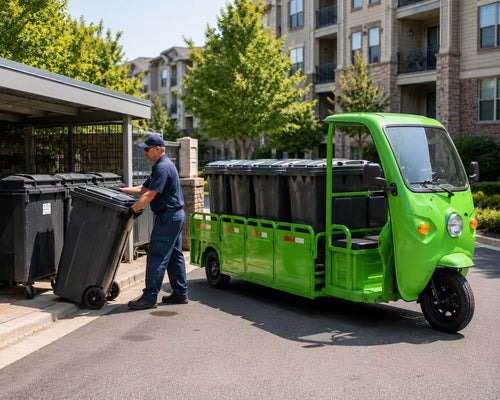
That question matters because many farms do not need a full-size side-by-side for every task. A lot of daily movement on a farm is short-distance, repetitive, and practical. Feed goes from storage to the barn. Tools go from the workshop to the fence line. Plant trays move from one greenhouse bay to another. Soil bags, hose parts, harvest crates, and maintenance supplies are carried around the property in small but constant loads. For this kind of work, a small electric utility truck for farm chores can often make more sense than a large, expensive off-road vehicle.
The main advantage of a compact electric farm utility vehicle is that it matches the rhythm of daily work. It is easy to get on and off. It is easier to load by hand than a higher-riding machine. It is usually quieter around livestock. It also avoids the smell, vibration, and routine fuel-engine maintenance that many farm owners want to reduce in barns, greenhouses, nurseries, and other close work areas.
Instead of asking, “What is the best electric utility vehicle?” a farm buyer often gets a better answer by asking, “Which work area is this vehicle for?”
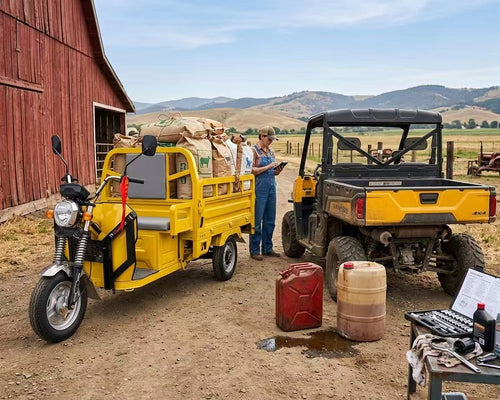
Barn and livestock areas are one of the clearest examples. In these zones, a farm utility vehicle is usually doing low-speed transport, not high-speed recreation. The job may be carrying feed bags, mineral tubs, fencing tools, bedding material, buckets, or small repair parts. A compact electric utility truck works well here because quiet operation matters around horses, cattle, goats, and other animals. The shorter routes also fit the strengths of an electric platform. If your daily pattern is repeated movement between feed storage, barn doors, service sheds, and pens, a small electric utility truck for farm use can be more practical than a larger electric UTV that was designed for broader off-road use.
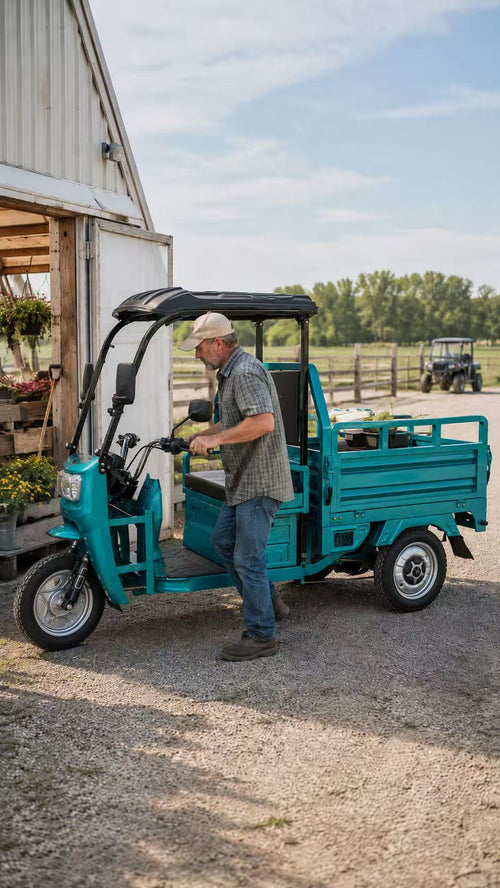
Greenhouses and nurseries are another strong fit. These environments reward compact dimensions, easy loading, and simple stop-and-go movement. A small electric utility vehicle can be useful for moving plant trays, potting soil bags, irrigation fittings, hand tools, fertilizer, empty crates, and harvest containers. In these settings, width and turning ease are often more important than maximum horsepower. This is where a compact electric utility cart for farm or nursery work can outperform larger machines simply because it wastes less space and is easier to position in tight working lanes.
Orchards and vineyards also create a good use case, especially when the routes are not extremely rough. A farm owner may need to move harvest crates, pruning tools, spray accessories, hoses, or maintenance supplies along narrow internal paths. If the work is light to medium duty and repeated many times through the day, an electric utility truck for farm and orchard use can be a practical tool. The key benefit is not just zero-emission operation. It is the combination of compact footprint, lower running noise, and the ability to keep moving materials without bringing in a full-size truck every time.
Around the farmyard and workshop, the same logic applies. Many daily jobs are not glamorous, but they consume time: carrying fasteners, small parts, sealants, grease, wire, chains, tools, irrigation fittings, and general supplies. A small farm utility truck can become an everyday material mover. It reduces walking time, reduces repeated lifting over long distances, and keeps basic maintenance work more organized. This is one reason why many people searching electric utility truck for farm are not really searching for a recreational machine. They are searching for a work routine solution.
This is also where buyers often need to separate a compact electric utility truck from a full electric UTV. A full-size electric UTV may be better if the farm has rough slopes, muddy fields, long off-road routes, heavy towing needs, or multi-passenger requirements. But a smaller electric utility truck can be the better fit when the job is centered on cargo movement, repeated loading and unloading, easier access, and lower operating cost. If most of the day involves materials rather than aggressive terrain, cargo-bed usefulness matters more than image or horsepower.
That is why one of the best buying questions is not “How fast does it go?” but “What do I load into it most often?” If your answer includes feed bags, fencing tools, produce crates, seed trays, hose rolls, spare parts, bedding, compost, or small equipment, then bed design becomes more important than style category. A simple cargo-focused machine can be more useful than a premium vehicle with features you rarely use.
When choosing an electric utility truck for farm work, buyers should check six practical things.
First, look at the actual work area width. Measure barn passages, greenhouse lanes, orchard rows, shed access points, and the turns around loading areas. Many buyers focus on published length and payload, but width and turning space often determine whether a machine fits daily work.
Second, think about load type, not only load weight. Bulky but lighter materials such as hay, bedding, empty crates, and plant trays require space and side access. Dense materials such as soil bags, feed, fertilizer, and hardware put more pressure on payload and loading convenience. The right electric farm utility vehicle should match both the shape and frequency of the load.
Third, think about terrain honestly. A small electric utility truck for farm use is usually strongest on farmyards, packed soil lanes, barn surroundings, greenhouse access routes, nursery paths, and mixed-property service roads. If your work regularly crosses deep mud, steep ruts, or aggressive off-road ground, then a 4WD electric UTV may still be the better tool.
Fourth, think about charging routine. A low speed electric vehicle for farm use should fit naturally into your workday. Many operations benefit from overnight charging, especially when the machine is used for short-route hauling rather than full-day high-speed travel. It is better to choose a vehicle that matches your real route pattern than to overbuy based on an unrealistic idea of range.
Fifth, think about maintenance simplicity. One reason many farms look at an electric utility truck is to reduce engine-related maintenance for daily support work. For routine movement around barns, nurseries, orchards, and property lanes, a simpler electric platform can reduce upkeep and keep operations cleaner and quieter.
Sixth, think about whether you need a street-legal platform or only an on-property work vehicle. Many farm buyers do not actually need road use. They need a reliable internal transport vehicle. Knowing this early helps narrow the category quickly.
So who is the best fit for this type of machine? In many cases, it is the small or mid-size farm owner, nursery operator, greenhouse grower, orchard manager, ranch support crew, or property maintenance user who handles frequent short-haul work every day. It is also a strong fit for buyers who feel that a full-size UTV may be too expensive, too large, or more machine than the daily job really requires.
A practical electric utility truck for farm use is not about replacing every vehicle on the property. It is about solving a specific class of work: repeated short-distance hauling, easier loading, quieter movement, and simpler daily transport. Once buyers understand that, the right vehicle choice becomes much clearer.
If your farm work is centered on barns, greenhouses, nurseries, orchards, workyards, and internal transport routes, a compact electric utility truck may not just be a cheaper alternative. It may actually be the better tool for the job.