Electric Utility Vehicle for Farm Transport – Efficient Agricultural Material Handling Solution
Modern farming depends on efficient transportation. Every day, farmers move fertilizer, harvested crops, animal feed, irrigation supplies, tools, replacement parts, and packaging materials across fields, orchards, greenhouses, and livestock facilities. Traditional manual transport often requires significant labor and time, while larger trucks and tractors may be oversized or expensive for short-distance daily work.
An electric utility vehicle provides a practical solution for farm transportation. Designed for repeated short-distance hauling, it helps reduce manual labor, improve efficiency, lower operating costs, and simplify daily agricultural operations.
Why Farm Transport Efficiency Matters
Many farms require hundreds of short transportation trips every week. Workers frequently move materials between storage buildings, greenhouses, orchards, livestock barns, workshops, and loading areas. Although each trip may only cover a short distance, the accumulated time and labor become significant throughout the farming season.
Improving transportation efficiency allows farm workers to spend more time on productive agricultural work instead of repeatedly carrying equipment and supplies by hand.
Common Transportation Challenges on Modern Farms
Agricultural operations often involve moving:
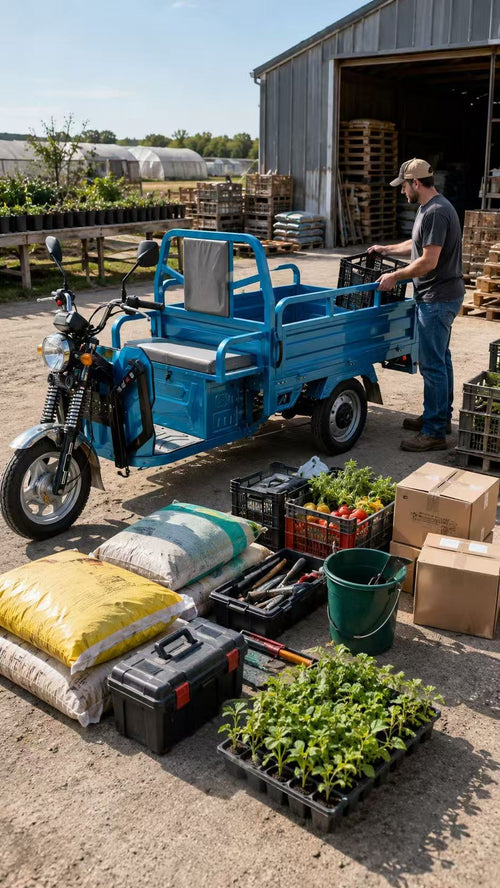
* Harvested vegetables
* Fruit crates
* Fertilizer bags
* Irrigation equipment
* Farm tools
* Animal feed
* Seed trays
* Packaging materials
* Maintenance supplies
These materials must often be transported several times each day between different working areas.
Manual transportation can slow operations, increase worker fatigue, and reduce overall farm productivity.
Daily Applications Across Different Farm Types
Electric utility vehicles can support many agricultural environments.
Crop Farms
Workers can transport seeds, fertilizers, pesticides, irrigation equipment, and harvested crops between fields and storage facilities.
Orchards
Fruit harvest requires continuous transportation during peak season. Utility vehicles simplify moving apples, oranges, peaches, grapes, berries, and other produce from the field to sorting or packing stations.
Greenhouses
Indoor farming operations benefit from compact electric vehicles capable of carrying plant trays, fertilizer, irrigation supplies, tools, and harvested vegetables through narrow greenhouse pathways.
Livestock Farms
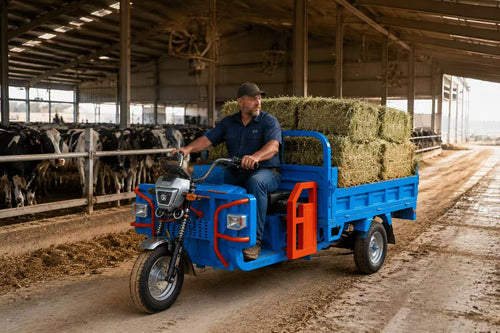
Feed, bedding materials, fencing equipment, veterinary supplies, and maintenance tools can be transported quickly between barns and animal holding areas.
Advantages of Electric Utility Vehicles
Compared with manual carts or traditional fuel-powered equipment, electric utility vehicles provide several important benefits.
* Lower operating costs
* Reduced maintenance
* Quiet operation
* Zero local exhaust emissions
* Easy operation for daily work
* Lower labor requirements
* Reliable short-distance transportation
* Better productivity during harvest seasons
Improving Material Handling Efficiency
Agricultural transportation is not simply about moving cargo. Efficient logistics improve the entire farming workflow.
Workers can complete more transportation tasks in less time, reducing delays between harvesting, sorting, packaging, feeding, and equipment maintenance.
Better material movement also helps reduce unnecessary walking distances and improves overall labor utilization.
Choosing the Right Farm Transport Vehicle
Selecting the correct vehicle depends on daily transportation needs.
Consider factors such as:
* Typical transport distance
* Average payload
* Farm road conditions
* Cargo dimensions
* Daily operating hours
* Seasonal workload
* Future expansion requirements
Choosing a vehicle that matches actual operational requirements helps maximize long-term productivity.
Why Electric Utility Vehicles Continue Growing in Agriculture
As labor costs increase and farms seek more efficient transportation methods, electric utility vehicles continue gaining popularity throughout modern agriculture.
They provide a practical balance between affordability, efficiency, flexibility, and ease of maintenance while supporting a wide variety of daily transportation tasks.
Whether operating on crop farms, orchards, greenhouses, livestock facilities, or mixed agricultural operations, electric utility vehicles have become valuable tools for improving material handling efficiency and supporting modern farm logistics.
Frequently Asked Questions
What materials can an electric utility vehicle transport?
Typical cargo includes harvested produce, fertilizer, feed, irrigation equipment, tools, packaging materials, replacement parts, and farm supplies.
Are electric utility vehicles suitable for orchards?
Yes. Their compact size makes them well suited for transporting fruit and equipment through orchard rows and harvest areas.
Can they operate inside greenhouses?
Many compact electric utility vehicles are suitable for greenhouse transportation where larger equipment is impractical.
Are they only useful during harvest season?
No. They support year-round agricultural operations including planting, maintenance, irrigation, feeding, repairs, harvesting, and daily logistics.
Conclusion
Farm transportation is an essential part of agricultural productivity. By replacing repetitive manual hauling with efficient electric transportation, farms can reduce labor requirements, improve operational efficiency, and simplify everyday material handling. Electric utility vehicles continue to offer an economical and practical solution for modern farms seeking reliable short-distance transportation across a wide range of agricultural applications.