Electric Farm Utility Trike for Daily Hauling: Cargo Bed, Payload, and Farm Route Planning
Share
An electric farm utility trike is not simply a three-wheel vehicle with a cargo box. For many small farms, ranch properties, orchards, nurseries, and private agricultural sites, it works as a short-distance hauling tool for daily routes that are too repetitive for hand carts but not always heavy enough for a full UTV, pickup truck, or tractor.
The most important question is not only whether the vehicle is electric. A farm buyer should look at the cargo bed, payload, motor power, battery system, ground conditions, turning space, and the type of loads moved every day.
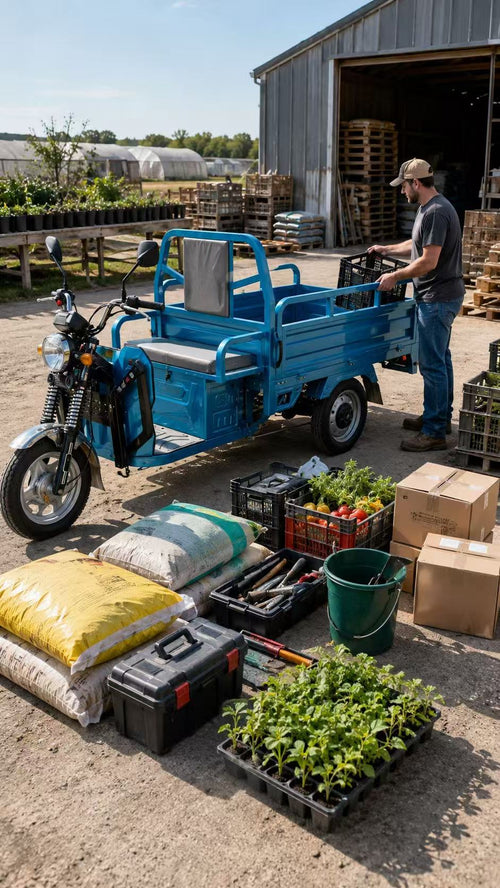
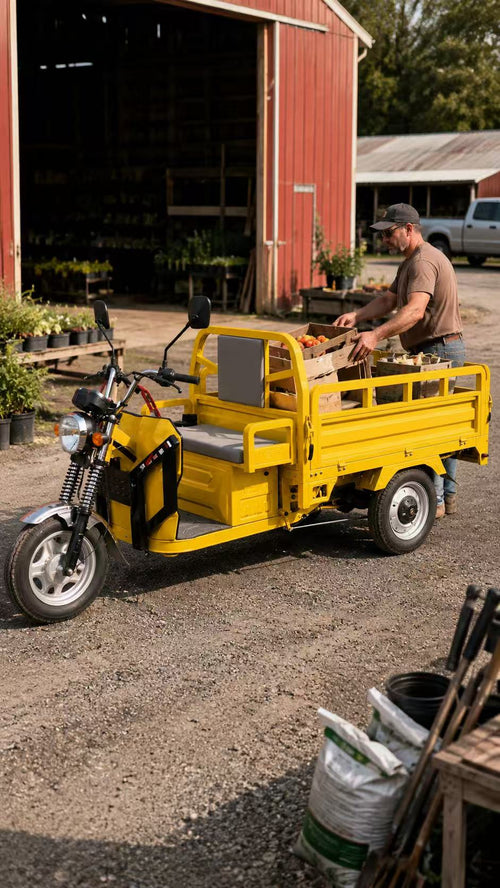
For daily farm hauling, an electric farm utility trike is usually used for moving feed bags, tools, produce crates, small equipment, water containers, seed, fencing supplies, bedding materials, and light maintenance items around private property. When the work happens again and again across barns, fields, packing areas, greenhouses, and storage sheds, a compact electric vehicle with a practical cargo bed can reduce walking, reduce small truck use, and make short routes more organized.
Why the Cargo Bed Matters First
The cargo bed is the center of the vehicle. A buyer should check the length, width, side height, access height, and how easy it is to load and unload.
A long open cargo bed is useful for mixed daily loads. It can carry produce crates, feed bags, buckets, hand tools, irrigation parts, small boxes, and farm supplies without needing a trailer. For farm work, a flat and open bed is often more flexible than a passenger-focused design because the operator can load from the side, tie down loose items, and separate different materials inside the bed.
Before choosing an electric farm utility trike, ask what the vehicle will carry most often:
Will it move feed bags from storage to the barn?
Will it carry produce from growing areas to a packing table?
Will it move tools, parts, and supplies between buildings?
Will it handle light soil, mulch, or compost in containers?
Will it support daily property maintenance instead of one heavy seasonal job?
A vehicle that looks powerful but has a small or awkward cargo bed may not solve the real problem. For farm buyers, cargo space should be checked before appearance, speed, or accessories.
Payload and Load Type
Payload is not only a number. It must match the load type, route, and surface.
A farm utility trike may carry dry goods one day and heavier mixed loads the next. Feed bags, produce crates, hand tools, and fencing supplies behave differently inside the bed. A load that is bulky but light may need more space. A load that is compact but heavy may need stronger suspension, better braking, and careful weight placement.
For daily work, the safest approach is to avoid overloading the cargo bed just because there is still empty space. Wet materials, dense bags, and uneven loads can become heavier than expected. The operator should keep the load low, balanced, and inside the bed sides.
For a non-dump open cargo bed model, it is better to use the vehicle for organized hauling rather than loose dumping. Crates, bags, buckets, toolboxes, and containers are better suited than loose wet soil or gravel. If the main job is dumping manure, mulch, gravel, or soil, a hydraulic dump model may be a better choice.
Motor Power and Farm Routes
An electric farm utility trike should be judged by the route, not only by motor size.
A farm route may include gravel lanes, barn paths, packed dirt, grass edges, orchard rows, greenhouse entrances, storage yards, and short paved sections. The vehicle does not need to be fast. It needs to move smoothly, start under load, turn safely, and stop with control.
For light daily hauling, motor power should support low-speed work rather than highway speed. A farm buyer should check whether the vehicle can handle repeated short trips with cargo, slight slopes, and stop-and-go movement around buildings, gates, and people.
Good route planning matters. Before buying, walk the route and check:
Gate width
Barn aisle space
Turning area
Ground firmness
Small slopes
Loading point
Unloading point
Charging location
Shared paths with workers, animals, or other vehicles
A vehicle that fits the actual route will be more useful than a larger machine that cannot pass through narrow areas.
Battery Planning for Daily Hauling
Battery range should be understood as work range, not just distance.
A farm utility trike may travel short distances many times per day. The battery must support repeated starts, stops, and loaded movement. A buyer should think about how many trips the vehicle will make before charging, where it will be parked, and whether charging can happen near the work area.
For daily farm routes, it is useful to plan a simple schedule:
Morning: move feed, tools, and supplies
Midday: use the vehicle for produce, maintenance, or restocking
Evening: park and charge near a safe power source
This kind of routine makes the electric vehicle easier to manage than a gas-powered machine that needs fuel storage, engine maintenance, and more noise around livestock or workers.
Open Cargo Bed vs Canopy or Cab
An open cargo bed electric farm utility trike is a practical choice when the buyer needs easy loading, low cost, simple visibility, and flexible daily use.
A canopy model may help if the operator needs shade or light weather protection. A cab model may be better for colder or wetter conditions. A hydraulic dump model is better when the main job is unloading loose material.
The open cargo bed model fits buyers who care most about:
Clear cargo access
Simple loading and unloading
Lower purchase cost
Daily farm routes
Tools, feed, produce, and supplies
Private property work
Short-distance hauling instead of passenger transport
Choosing the right configuration depends on the work. The best farm utility trike is not always the most expensive one. It is the one that matches the daily route, cargo type, and operator needs.
When an Electric Farm Utility Trike Makes Sense
An electric farm utility trike makes the most sense when the work is frequent, short-distance, and cargo-focused.
It is not meant to replace every tractor, UTV, pickup truck, or heavy equipment machine. Instead, it fills the gap between walking by hand and using a larger vehicle for every small task.
It can be useful for:
Moving feed bags around barns
Carrying hand tools and repair parts
Transporting produce crates from rows to packing areas
Moving supplies between greenhouse or nursery sections
Supporting fence repair and property checks
Reducing small pickup truck trips on private land
Helping one operator complete repeated light hauling routes
For small farms and private agricultural properties, the real value is not only the vehicle price. The value comes from saving repeated walking, keeping tools and supplies together, and using a smaller electric vehicle for jobs that do not require a full-size machine.
What Buyers Should Check Before Ordering
Before choosing an electric farm utility trike, check the daily work instead of only comparing product photos.
The buyer should confirm:
Cargo bed size
Payload rating
Motor and battery options
Ground conditions
Route width
Loading height
Turning space
Brake control
Charging area
Local use rules for private property or public roads
If the vehicle will be used mainly on private farm roads, barns, storage areas, and internal property routes, it can be a practical daily hauling tool. If it needs to travel on public roads, the buyer should check local state and traffic rules before purchase.
Final Thought
An electric farm utility trike is best understood as a compact work vehicle for daily hauling routes. The cargo bed, payload, route, battery system, and load type matter more than speed or appearance.
For farms, ranch properties, nurseries, greenhouses, and private landowners who move feed, tools, produce, and supplies every day, the right electric farm utility trike can become a simple and useful part of the daily work system.