One Vehicle, Many Jobs: How Small Crews Use Electric Dump Carts Across a Workday
Share
Small crews often have the hardest material handling problems. They may not have enough workers to assign one person to hauling all day. They may not have enough space to use a full-size tractor for every small job. They may not want to start a pickup truck or larger utility vehicle for repeated short trips around a farm, ranch, horse stable, landscaping site, nursery, or property.
That is where an electric dump cart can become more than a hauling vehicle.
For small crews, the value of an electric dump cart is not only in one heavy load. It is in how many different daily jobs one vehicle can support.
A compact electric dump hauler can move loose materials, tools, feed, bedding waste, manure, mulch, compost, soil, gravel, wood chips, branches, and cleanup debris across a worksite. When the vehicle has a hydraulic dump bed, it can also reduce manual unloading for suitable loose bulk materials. This makes it useful not just for one task, but for a full day of repeated work.
Why do small crews need multi-use hauling equipment?
Small crews need equipment that can switch tasks quickly. A farm owner, ranch worker, stable hand, landscaper, or property maintenance worker may need to clean, haul, repair, deliver, unload, and return many times in the same day.
If every task requires a different tool, the team loses time switching equipment. If workers rely only on manual carts or wheelbarrows, they lose energy. If they wait for a tractor or pickup truck, small jobs may take longer than necessary.
A small electric work vehicle helps fill the gap between manual tools and oversized equipment. It can be used for short-distance material handling without making every job feel like a major equipment operation.
What can an electric dump cart do in the morning?
Morning work often begins with cleanup. On horse farms, ranches, dairy areas, poultry areas, and small farms, the first jobs may include manure hauling, bedding waste removal, barn cleanup, feed waste transport, or moving compostable material to a dump zone or compost pile.
An electric dump cart for manure and bedding waste can reduce repeated manual hauling from stalls, barns, pens, or livestock areas. The cargo bed can carry loose materials such as manure, wood shavings, straw, wet bedding, compost, and barn debris. If the material is suitable for dumping, the hydraulic dump bed can help unload it from the rear with less manual tipping.
This type of morning work is not always heavy in one single load. It is heavy because it repeats. A battery powered dump cart helps keep that repeated cycle moving.
How can the same vehicle support mid-day supply runs?
After cleanup, the same vehicle can support supply movement. A small crew may need to carry feed bags, fencing supplies, small repair parts, hand tools, buckets, hoses, nursery trays, landscape tools, or property maintenance equipment.
These items may not always be suitable for hydraulic dumping. Bagged feed, boxed parts, tools, and fragile supplies should usually be unloaded by hand. But the electric utility vehicle still provides value by moving them efficiently across the property.
This is an important point: an electric dump cart is not only useful when the dump bed is raised. It is also useful as a compact cargo vehicle for daily supply runs.
What afternoon jobs fit a battery powered dump cart?
Afternoon work often shifts toward material delivery, repair, or cleanup. A landscaping crew may move mulch, soil, compost, gravel, wood chips, branches, sod, or yard debris. A ranch worker may move fencing materials, water line supplies, feed waste, or gravel for small repair areas. A property maintenance team may transport tools, plants, soil, cleaning supplies, and debris between buildings.
A battery powered dump cart can support these tasks because it handles repeated short-distance movement. It does not need to travel far to be useful. Its value appears when the same work area requires many small loads throughout the day.
For loose materials such as mulch, compost, soil, gravel, wood chips, manure, and debris, the hydraulic dump bed can reduce unloading effort. For packaged or fragile materials, the cargo bed still helps carry the load, but the operator should unload carefully by hand.
How does hydraulic dumping help when loose materials are involved?
Hydraulic dumping matters when loose materials need to be unloaded repeatedly. Soil, gravel, manure, mulch, compost, wood chips, bedding waste, and yard debris can be difficult to tip or shovel by hand again and again.
A hydraulic dump utility vehicle helps shorten that unloading step. When the cargo bed is raised, suitable loose material can slide naturally from the rear of the bed. In real work, the vehicle may move forward very slowly and safely while dumping, allowing the material to form a more even pile or short line behind the vehicle.
This does not mean every load should be dumped. The operator still needs to consider the material, ground condition, load balance, and dump zone. But when the material is suitable, hydraulic dumping helps small crews reduce repeated manual unloading.
Can one electric dump cart serve farms, ranches, stables, and property maintenance?
Yes, because many of these work environments share the same problem: short-distance material handling.
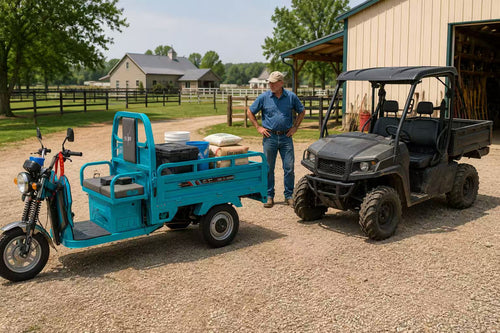
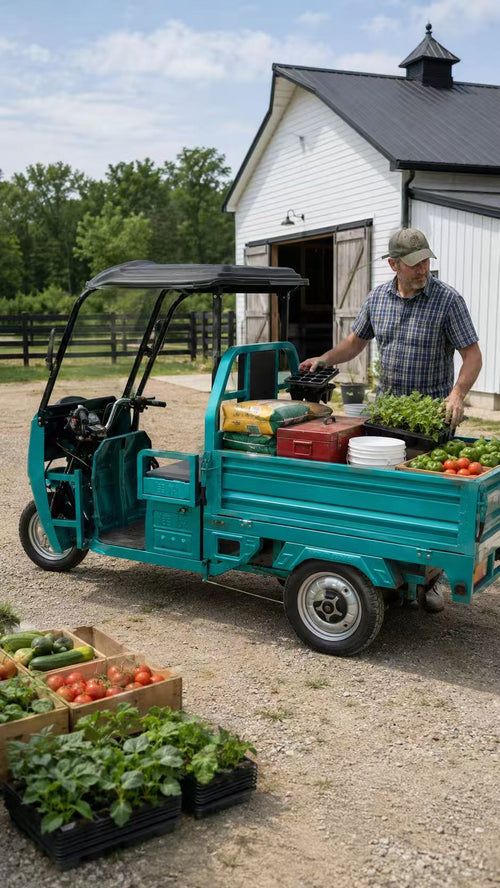
A farm may use the vehicle for soil, compost, feed supplies, and harvest support. A horse stable may use it for manure, bedding waste, feed bags, and barn cleanup. A ranch may use it for fencing supplies, feed waste, minerals, tools, and gravel repair. A landscaping crew may use it for mulch, soil, plants, branches, and cleanup debris. A property maintenance team may use it for tools, supplies, trash, plants, repair parts, and yard waste.
The exact materials change, but the workflow is similar: load, move, unload, return, and repeat.
That is why a compact electric dump hauler can serve more than one department or task on the same property.
What makes this useful for small teams?
Small teams need to reduce wasted movement. If one worker spends too much time carrying materials by hand, the rest of the work slows down. If a crew waits for larger equipment for every small load, the job becomes inefficient. If workers make too many trips with small manual loads, fatigue builds up.
An electric dump cart helps small teams in several ways. It reduces manual carrying, increases the amount moved per trip, makes short routes faster, supports tool and supply transport, and reduces repeated unloading effort when loose materials are involved.
The vehicle becomes a shared daily tool instead of a single-purpose machine.
Can a compact electric dump hauler carry both tools and loose materials?
Yes, but operators should separate the unloading method from the carrying method. A compact electric dump hauler can carry tools, bags, boxes, feed supplies, plants, and loose materials. However, not all cargo should be dumped.
Loose bulk materials such as soil, gravel, manure, mulch, compost, wood chips, and bedding waste are usually better suited for hydraulic dumping. Tools, boxes, feed bags, fragile items, and packaged supplies should usually be removed by hand.
This flexibility is useful because a small crew may need to carry both types of loads in the same day.
How does one vehicle reduce equipment switching?
Equipment switching wastes time. Workers may spend time finding a cart, moving a wheelbarrow, waiting for a tractor, loading a pickup, or returning to get another tool. A small electric utility vehicle reduces that switching by staying available for many daily hauling jobs.
The same vehicle can move manure in the morning, carry repair tools before lunch, haul mulch in the afternoon, and clean up debris before the day ends. That does not mean it replaces every machine on the property. It means it handles the repeated small and medium hauling tasks that often consume labor.
This is where the vehicle’s real value appears.
What should buyers look for when choosing one vehicle for many jobs?
Buyers should not choose only by payload. They should ask how many different jobs the vehicle must support in one workday.
Important questions include:
Will the vehicle carry both loose materials and packaged supplies?
Will it be used in barns, stables, ranch lanes, orchards, nurseries, landscaping sites, or maintenance areas?
Does the cargo bed fit the materials used every day?
Is hydraulic dumping needed for manure, soil, mulch, compost, gravel, or wood chips?
Can the vehicle move through narrow paths or work areas?
Will more than one worker use it?
Can the battery routine support repeated daily work?
Is the vehicle simple enough for different crew members to operate safely?
These questions help buyers choose a vehicle based on daily work, not just specifications.
Why does multi-use value matter more than one-time capacity?
A vehicle that carries one large load can be useful. But for small crews, the bigger question is how often the vehicle helps throughout the day.
If the electric dump cart only helps with one task once a week, its value is limited. If it helps with cleanup, supply transport, material delivery, dumping, repair support, and end-of-day cleanup, its value increases quickly.
Small crews do not always need the largest vehicle. They need equipment that is easy to use often.
One vehicle can support the whole workday
A good electric dump cart works like a daily support tool. It helps workers move the materials that would otherwise slow them down: manure, bedding waste, feed bags, soil, gravel, mulch, compost, wood chips, branches, tools, and maintenance supplies.
For small farms, ranches, horse stables, landscaping crews, nurseries, and property maintenance teams, one vehicle can support many different jobs across one workday.
The most important question is not only, “How much can it carry?”
The better question is, “How many daily jobs can it make easier?”
When one electric dump cart helps a small crew move from cleanup to supplies, from supplies to repair, from repair to material delivery, and from material delivery to final cleanup, it becomes more than a cart. It becomes part of the workday.