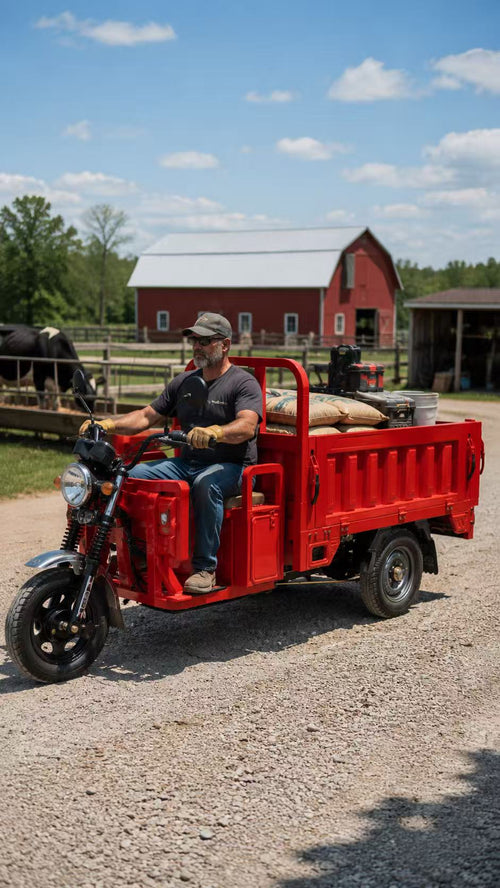
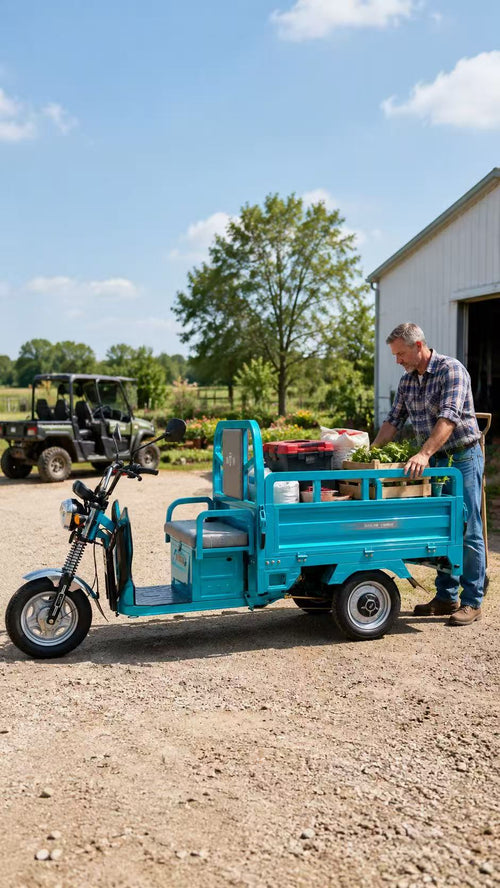
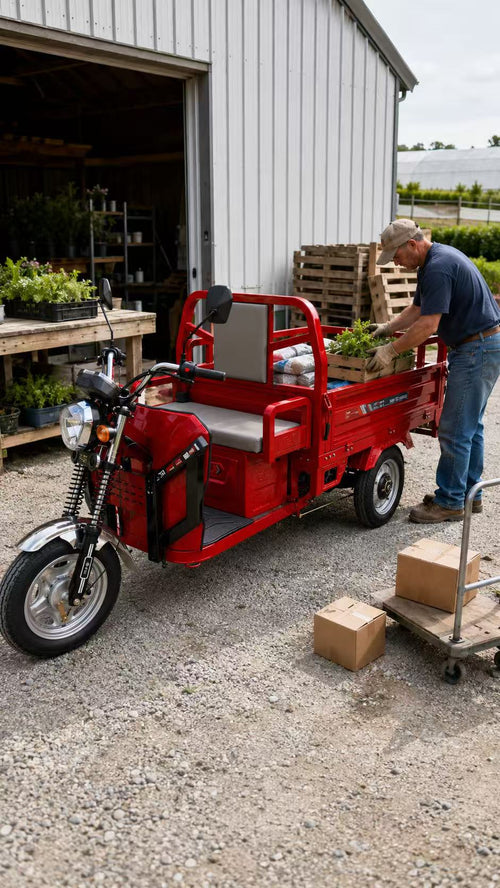
Working Around Animals: Using an Electric Dump Cart Near Horses, Cattle, and Livestock
Share
Farm, ranch, and stable work is not only about moving material.
It is also about working around animals.
An electric dump cart can help move manure, bedding waste, feed bags, wood chips, compost, soil, gravel, tools, water buckets, and cleanup debris across horse stables, cattle barns, poultry houses, livestock areas, and ranch properties. But when animals are nearby, the workflow needs more planning than a normal material yard.
A vehicle can carry the right load and still create problems if it stops in the wrong place, blocks an animal path, moves unpredictably, unloads too close to livestock, or interrupts a gate or barn aisle.
In animal areas, an electric dump cart should not only move material efficiently.
It should move predictably, stop in the right place, avoid blocking animal paths, and support barn or ranch work without creating unnecessary stress or confusion.
Animal work areas are not ordinary material yards
A landscaping material yard or construction cleanup area may mainly involve people, tools, vehicles, and materials.
Animal areas are different.
A horse stable has stall doors, barn aisles, tack rooms, wash areas, bedding storage, manure routes, feed rooms, and animal movement. A cattle ranch may have gates, pens, feed areas, lanes, water points, fencing, chutes, and livestock paths. Poultry and livestock buildings may have narrow access routes, bedding areas, feed storage, cleaning zones, and worker movement.
In these places, the vehicle is only one part of the system.
Workers, animals, gates, tools, feed, waste, and movement routes all share the same space. A good electric dump cart workflow should respect that space.
Predictable movement matters
Animals often respond to movement, sound, and sudden changes.
A quiet electric vehicle may be less disruptive than louder equipment, but quiet operation does not replace careful operation. A vehicle that starts suddenly, turns sharply, stops too close, or approaches from an unexpected angle can still disturb animals.
Predictable movement is important.
The operator should move slowly and steadily around horses, cattle, and livestock areas. The vehicle should not rush into a barn aisle, cut across an animal route, or approach animals from a blind corner.
The goal is to make the vehicle part of the normal work rhythm, not a surprise.
This is especially important in horse stables, where some horses may be more sensitive to movement near stall doors, wash areas, or barn entrances.
Do not block animal paths
One of the most important rules is simple:
Do not park the vehicle where animals need to pass.
This includes barn aisles, stall entrances, gate areas, pen openings, livestock lanes, feed access points, water points, and working chutes. Even a compact cart can create a problem if it stops in the wrong place.
A blocked path can slow the work, confuse animals, force workers to move around the vehicle, or create a tight situation in a place that should stay open.
Temporary parking matters in animal areas. The vehicle should wait beside the route, not inside the route. It should be close enough for work but far enough to keep animal movement clear.
If a gate needs to swing open, the cart should not sit in the gate swing area. If animals need to move through a lane, the cart should not become an obstacle.
Keep loading areas away from animal movement
Loading material near animals requires planning.
Manure, bedding waste, feed bags, wood chips, compost, tools, and loose materials may all need to be loaded into the cart. But the loading point should not interfere with animals entering or leaving stalls, pens, feed areas, or lanes.
For horse stable work, the cart may wait near the barn aisle while workers clean stalls. The cargo bed should be close enough to reduce carrying, but not so close that it blocks horses, workers, buckets, doors, or cleaning tools.
For cattle and livestock work, the loading point should stay clear of herd movement and gate access. If animals are being moved, sorted, fed, or handled, the cart should not be placed where it narrows the working space.
A good loading position reduces labor without creating conflict with animals.
Keep dumping away from animals
Dumping loose material creates movement, sound, and visual change.
When a hydraulic dump bed raises, the shape of the vehicle changes. When manure, compost, bedding waste, soil, gravel, wood chips, or debris slides out, the material may create noise, dust, movement, odor, or ground disturbance.
That should not happen too close to animals.
The dump zone should be planned away from animal feet, narrow gates, stall entrances, feed areas, water points, and crowded livestock routes. Animals should not be standing beside or behind the dump area.
This does not mean dumping must happen far away from the work. It means the dump zone should be separated from animal movement.
The vehicle can still unload efficiently, but the unloading area should belong to the material handling workflow, not the animal traffic path.
Horse stable example: manure and bedding waste
Horse stables are one of the most practical places for an electric dump cart.
Daily work may include cleaning stalls, moving manure, hauling wet bedding waste, carrying clean bedding, transporting feed bags, moving tools, and taking waste to a compost area.
A good workflow keeps the cart near the work without blocking the horses.
The vehicle may wait along the side of a barn aisle, outside a stall row, near a wide doorway, or beside a compacted route. The operator should avoid stopping directly in front of stalls where horses need to move in or out.
Clean bedding and feed should usually be handled before dirty waste loads when possible. Manure and wet bedding waste can be loaded later and transported to the compost or waste area.
When dumping, the cart should unload at the planned manure or compost zone, away from horses and stable traffic.
The cart helps most when it reduces repeated wheelbarrow trips without making the barn aisle feel crowded.
Cattle ranch example: gates, lanes, and feed areas
Cattle ranch work often involves gates, feed areas, pens, lanes, and open yard spaces.
An electric dump cart may help with feed-area cleanup, manure movement, bedding waste, gravel patches, fence tools, water area maintenance, compost, and small material hauling.
The important point is not to block the working flow of cattle.
The vehicle should not park in a gate opening, against a swinging gate, in a narrow lane, beside a water point where animals need access, or in a location that forces animals into a tight turn.
When working near feed areas, the operator should separate the vehicle route from livestock movement as much as possible. The cart should support cleanup and material movement, not become part of the animal handling problem.
If cattle are being moved, sorted, or worked, vehicle movement should be more controlled and predictable.
Poultry and livestock building example
Poultry houses and smaller livestock buildings may have narrow access routes and sensitive work zones.
The cart may be used for bedding, feed bags, litter cleanup, tools, maintenance supplies, and waste removal. These jobs often happen in tight spaces where workers, materials, and animals are close together.
A compact electric dump cart can help, but it should not be pushed into crowded animal areas without planning.
Loading and unloading should happen where workers have room to move and animals are not forced against the vehicle. Bedding waste, litter, and feed materials should be separated when possible. Routes should stay clear enough for workers to exit safely and continue normal care tasks.
The smaller the space, the more important the workflow becomes.
Quiet operation helps, but planning matters more
Electric vehicles are often quieter than gas-powered equipment.
That can be helpful around barns, stables, and livestock areas. Lower noise may reduce some disruption, especially during daily chores.
But quiet operation does not mean the vehicle can move anywhere without concern.
Animals may still react to sudden motion, raised dump beds, sliding material, workers gathering near a gate, or a vehicle appearing in a tight space. Predictable movement, clear routes, and good parking positions matter more than noise alone.
A quiet vehicle is an advantage.
A planned workflow makes that advantage useful.
Keep people, animals, and material separated when possible
The best animal-area workflow separates three things as much as possible:
people movement, animal movement, and material movement.
These three flows often overlap, but they should not fight each other.
If workers are carrying tools, animals are moving through a gate, and the cart is waiting to unload in the same space, the work area becomes crowded. If manure is loaded where feed bags are being delivered, clean and dirty tasks may interfere with each other. If the cart parks where animals turn, the route becomes harder to manage.
A better setup gives each flow its own space when possible.
The electric dump cart should have a practical route. Animals should have clear paths. Workers should have enough room to load, unload, open gates, clean stalls, and move safely.
Avoid turning the cart into a gate problem
Gates deserve special attention.
On farms, ranches, and stables, gates are active work points. They open, close, swing, latch, guide animals, divide spaces, and control movement.
A vehicle parked in the wrong gate area can create problems quickly.
The cart should not block a gate swing. It should not stop where a worker needs to latch or unlatch a gate. It should not sit in a narrow opening while animals are waiting. It should not force people to step into an unsafe or awkward position to move around it.
Before stopping near a gate, the operator should ask whether the gate still works normally with the vehicle parked there.
If the answer is no, the cart should wait somewhere else.
Do not unload into active animal routes
Loose material should not be dumped where animals need to walk.
This includes manure piles, bedding waste, compost, wet soil, gravel, sand, wood chips, or cleanup debris. Even if the material itself is not dangerous, placing it in an active animal path can create confusion, slipping, obstruction, or extra cleanup.
The dump zone should be chosen before the bed is raised.
It should have enough room for the material to land, enough room for the vehicle to move away, and enough separation from animals.
A clear dump zone helps keep animal routes clean and predictable.
Clean and dirty tasks should be organized
Animal work often involves both clean and dirty loads.
Clean loads may include feed bags, clean bedding, tools, buckets, repair supplies, and packaged materials. Dirty loads may include manure, wet bedding waste, compost, muddy material, litter, and cleanup debris.
When possible, clean materials should move before dirty materials. This reduces the chance that feed bags, clean bedding, or tools are placed into a cargo bed that just carried manure or wet waste.
This is especially important in horse stables, dairy areas, poultry houses, and livestock buildings.
If dirty loads must come first, the operator should plan a cleaning step before carrying clean supplies later.
Questions to ask before using the cart near animals
Before using an electric dump cart near horses, cattle, or livestock, the operator should ask practical questions.
Where do animals need to move?
Will the cart block a stall, gate, lane, or feed area?
Can the vehicle wait without narrowing the path?
Is the loading point clear of animal movement?
Is the dump zone away from animals?
Will the raised bed be too close to a stall, pen, or gate?
Does someone need to open or close gates before the cart moves?
Are clean materials separated from dirty loads?
Can workers move around the cart safely?
These questions help prevent simple workflow problems.
A better animal-area workflow
An electric dump cart can be very useful in animal work areas.
It can reduce repeated wheelbarrow trips, support manure and bedding cleanup, move feed and supplies, carry compost, transport tools, and help small crews manage daily chores.
But the vehicle should fit the animal environment.
It should move slowly and predictably. It should not block gates or animal paths. It should load and unload away from animal movement. It should keep clean and dirty tasks organized. It should support workers without crowding barns, lanes, or pens.
Good material handling around animals is not only about the vehicle.
It is about the space, timing, route, animals, workers, and material moving together without unnecessary conflict.
When an electric dump cart is used with that planning, it becomes more than a hauling tool.
It becomes part of a safer, cleaner, and more organized daily farm, ranch, or stable workflow.